

Immigration to Italy: How to Obtain Permanent Residence and Move in 2026
Permanent residence in Italy is a status that becomes available after 5 years of continuous...
 08.09.2026




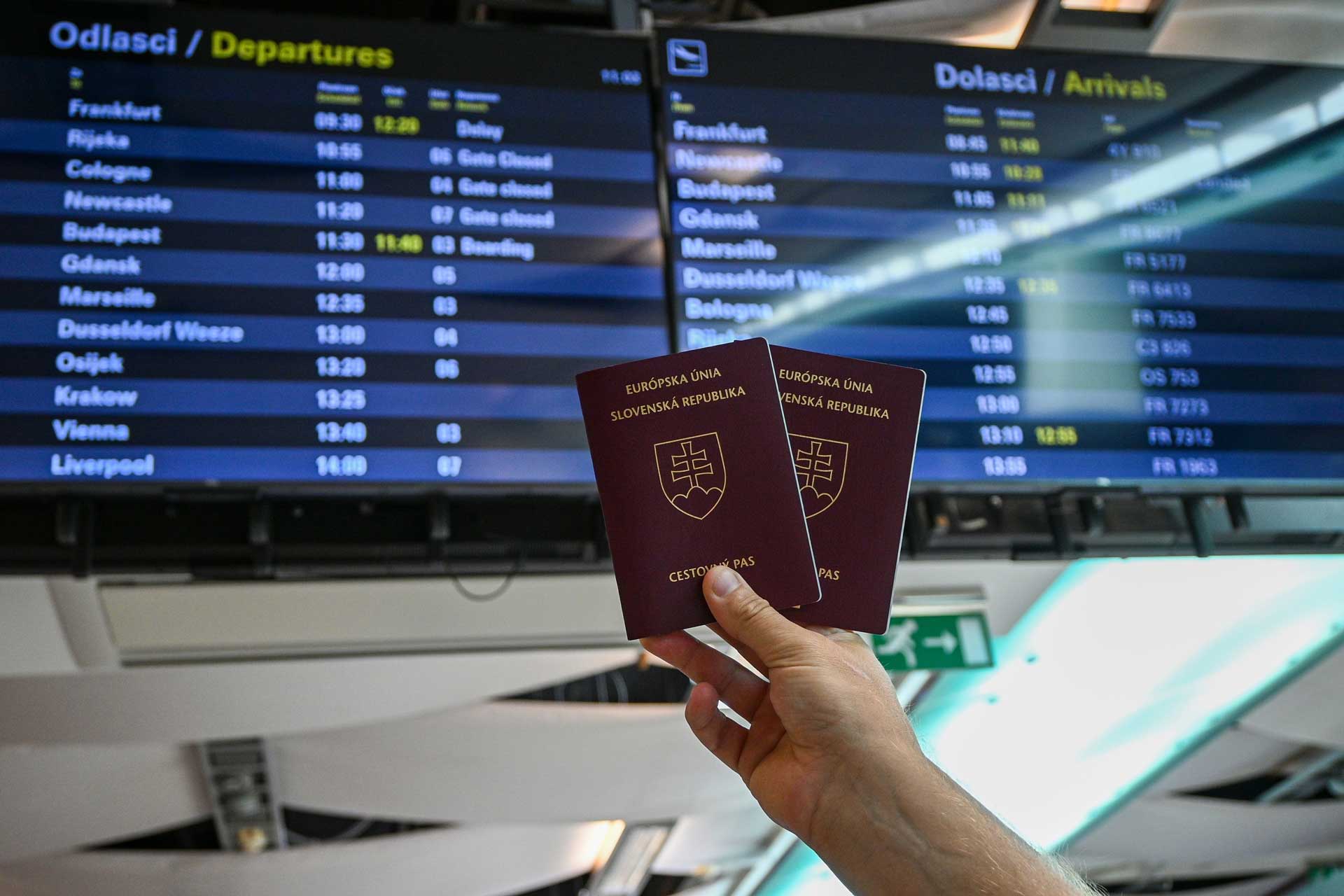
Slovak citizenship can be obtained through naturalization (following long-term residence in the country), through repatriation (if you have Slovak ancestry), and by birth (from parent to child). In exceptional cases, it may also be granted for significant contributions. With a Slovak passport, you can travel visa-free to more than 160 countries, relocate with your family to any EU country without additional requirements, register a business within EU jurisdictions, and access high-paying job opportunities.
Under the standard procedure, naturalized foreigners can obtain a passport after 8 years of permanent residence or after 10 years of continuous stay in the country (in this case, permanent residency duration is not decisive). Faster access to citizenship is available for ethnic Slovaks, spouses of Slovak citizens, refugees, and stateless persons.
The basic requirements for all categories include a clean legal record, passing language and integration exams, financial stability, accommodation in the country (rented housing is acceptable), and valid health insurance. When applying for citizenship by descent, only a criminal record check and the absence of tax debts (if applicable) are required.
Citizenship through repatriation can also be obtained in other EU countries, and with the support of immigration specialists, the process may take from 12 months. By submitting a request for a free consultation, you can assess which pathway to second citizenship in the EU is most suitable for your specific situation.
The Law “On Citizenship of the Slovak Republic” (originally — “O štátnom občianstve Slovenskej republiky”) is the main legal act governing the granting of national status. Additional provisions important for migrants are regulated by Act No. 404/2011 “On the Residence of Foreigners” (“O pobyte cudzincov”).
The general rules for obtaining a passport are quite strict: the standard waiting period for most applicants can reach up to 13 years, which is significantly longer than in many other EU countries. Dual citizenship in Slovakia is generally restricted due to the lack of relevant agreements with other states, although multiple citizenship is formally permitted under certain conditions.
Slovakia is a member of the European Union, so its migration policy is also influenced by international agreements and EU directives. A key directive is the 2004 regulation “On the Right of Citizens of the EU and Their Family Members to Move and Reside Freely.” The core principle of this document is that individuals holding an EU passport have the right to reside freely with their close family members in any of the 27 EU member states.
Seven categories of applicants may qualify for Slovak citizenship:
In most cases, an adult applicant must legally reside in the country for a certain period — from 3 to 13 years, depending on the legal basis. This requirement does not apply to repatriates or individuals with significant contributions to the state.
Additional general requirements include:
When applying for citizenship by descent, requirements are limited to lawful conduct, including the absence of tax or other debts. Proof of Slovak origin is also mandatory.
A standard application file for naturalized applicants includes:
Knowledge of the national language, culture, geography, and legal system is typically assessed during an interview with authorities when submitting the citizenship application. All documents must be submitted in Slovak with notarized translations, and in some cases, apostille legalization is required.
Most applicants can obtain a Slovak passport only through naturalization if they do not have local ancestry or significant merits before the state. Repatriates are those who can prove their ethnic connection to the Slovak nation. Birth on the territory of Slovakia does not grant citizenship to either the child or their parents (if they are foreigners). The only exception is that children born in the country may naturalize after 36 months of residence with permanent residency (upon reaching adulthood).
It is impossible to buy Slovak citizenship for any amount. A significant financial contribution to the country’s economy is not considered a special merit — this contradicts EU principles. Citizenship is not granted through investment, and even permanent or temporary residence permits are not issued on this basis, unlike in Malta, Cyprus, Latvia, Portugal, or Bulgaria. As a result, there are only four main pathways to obtain national status.
Under updated rules (since 2022), Slovak citizenship can be obtained by individuals who have ancestors up to the third generation (inclusive) who held Slovak or Czechoslovak citizenship (during its existence). It is important that the relevant ancestor was born on the territory of the state. Children, grandchildren, and great-grandchildren of Slovaks aged 18 and older may apply, provided they have no criminal record and, if residing in the country, no outstanding debts.
The application can be submitted through a diplomatic mission — prior residence in Slovakia is not required. Typically, applicants must provide a passport, birth certificates for each ancestor in the direct line, a criminal record certificate, and proof of payment of the state fee (approximately 30 EUR).
In some other EU countries, repatriation is available up to the fourth generation (great-great-grandchildren). At the same time, the rights of EU citizens are identical across all member states: the ability to work and start a business without additional permits, access to high-quality healthcare and free education, simplified family reunification, and visa-free travel to over 160 countries.
A Slovak passport is typically granted after 8 years of residence with permanent residency. In turn, most migrants obtain permanent residence only after 60 months of living in the country, except for family members of Slovak residents or citizens. Alternatively, citizenship can be obtained after 10 years of continuous residence in Slovakia, provided permanent residency has been granted (regardless of when it was obtained). For many migrants, this second option is more realistic.
Applicants must meet all general requirements, including language proficiency and social integration. Applications are submitted only within Slovakia through regional offices of the Ministry of Interior. The cost of obtaining Slovak citizenship in this case is 1,000 EUR (administrative fee for processing the application).
To relocate to Slovakia and begin the naturalization process, it is necessary to first obtain a temporary residence permit, which later leads to permanent residency. This status is granted only for long-term purposes, such as:
A Slovak passport can be obtained after 5 years of residence for spouses of Slovak citizens, provided they have lived together throughout this period. Stateless persons may apply for citizenship after 3 years of residence, while recognized refugees can do so after 48 months. Individuals holding the status of a Slovak living abroad may also naturalize after 36 months. In all cases, the basic requirements for applicants remain the same.
Slovak citizenship may be granted individually by the authorities to persons whose contributions to the country — for example in culture, science, or sports — are considered outstanding. Such cases are extremely rare, and it is not possible to apply independently under this pathway — the initiative must come from state authorities. Public sources mention only isolated cases of honorary citizenship, most often involving athletes representing national teams with international achievements.
To obtain citizenship in Slovakia, applicants typically need to complete five standard steps:
The main reason for refusal of citizenship applications is a negative reputation of the applicant, both in Slovakia and abroad. This includes criminal records, violations of EU migration regulations, connections with undesirable organizations, or outstanding debts such as taxes or social contributions. Even unpaid fines can become an obstacle to obtaining citizenship. Applications are also often rejected for formal reasons — incorrectly prepared files, missing documents, or lack of proper legalization (apostille).
A person who has already obtained citizenship may lose it if it is later discovered that the status was granted based on false or incomplete information or the use of forged documents. To avoid issues when applying for a passport in the European Union, it is advisable to seek support from specialized professionals. International law experts are well-versed in all procedural nuances, and their involvement can help prevent refusal and ensure a smoother process.
A Slovak passport grants the right to freely choose a place of residence within the EU/EEA. It also provides visa-free access to more than 160 countries worldwide, including China, Australia, Japan, the United States, New Zealand, the United Kingdom, and South Korea. Slovak citizens also enjoy the following advantages:
Slovak authorities do not explicitly prohibit holding a second citizenship under the law. However, within Slovakia, you will be recognized only as a Slovak citizen and must use a Slovak passport. Abroad, you are free to choose which passport to present — Slovak or another. As of 2026, Slovakia does not have agreements with other countries on the mutual recognition of dual citizenship.
According to migrant reviews, not everyone successfully completes naturalization in Slovakia — the main challenge is the long waiting period. In some cases, temporary residence permits are revoked earlier than expected (if the original reason for staying in the country no longer applies) or cannot be renewed, which interrupts the required residence period. Language proficiency at the A2 level is already required at the stage of obtaining permanent residence, so preparation is essential — often through courses or private tutors. It is also important to understand general integration topics, as failure to pass the citizenship interview will result in the application being rejected.
Foreigners who have obtained a Slovak passport recommend consulting specialists before starting the process. This helps avoid mistakes when choosing an immigration pathway, preparing documents, and communicating with authorities.
International law specialists offer professional assistance in obtaining citizenship in Slovakia and other EU countries. Turnkey services typically include:
You can start the process of obtaining a second EU passport today. To do so, simply schedule a legal consultation by submitting a request through the form.
Yes, but only in limited cases. This applies to citizenship by descent (repatriation). If you can prove Slovak ancestry (for example, up to the third generation), you may obtain citizenship without long-term residence. In other cases, naturalization requires living in the country.
Standard naturalization takes around 8–10 years (including the path from temporary to permanent residence). However, citizenship by descent may take from 12 to 24 months with proper document preparation.
Yes, for naturalization you must demonstrate knowledge of the Slovak language, as well as basic understanding of history, culture, and the political system. This is usually done through an oral interview.
No. There is no citizenship-by-investment program in Slovakia. Investments may help you obtain residence, but they do not grant direct access to citizenship.
No. Slovakia follows the principle of jus sanguinis (right of blood), not jus soli (right of soil). A child acquires citizenship only if at least one parent is a Slovak citizen.
No, not fully online. Some steps may begin remotely, but submitting the application and attending the interview require personal presence at Slovak authorities.
Yes, minor children can obtain citizenship together with their parents or separately, depending on the legal basis (naturalization or descent).

Ability to do business and work in the EU without restrictions
Study in European universities with the civil rights
Visa-free travel to more than 160 countries around the world
Full access to the freedoms and guarantees established for EU citizens