

UAE Residence Permit: A Complete Guide to Obtaining Residency in 2026
The UAE residence permit (UAE Residence Visa) is a resident status that gives a foreign...
 17.07.2026



Permanent residence in Sweden is an indefinite residence status that also provides full access to the labour market. Although the residence card itself is issued for 5 years, the status is permanent, allowing holders to remain in the country for decades. At the same time, moving to Sweden for permanent residence is only possible through a multi-stage process: applicants must first obtain a temporary residence permit, live in Sweden for 5 years, and only afterward become eligible for permanent residence status.
There are currently no immigration programmes that grant immediate permanent residency upon arrival. Therefore, applicants must first choose a suitable immigration basis — such as employment, business activity, education, or family reunification — obtain a temporary residence permit on that basis, and later apply for permanent residence. Sweden is considered an excellent destination for people seeking economic stability, high salaries, and effective social support. The country consistently ranks among the world leaders in quality of life and business conditions, while its population has repeatedly been recognised as one of the happiest in the world.
Sweden’s immigration statistics are highly illustrative: approximately every fourth resident is a foreign national. Immigrants are attracted by the following advantages of living in Sweden:
The advantages of life in Sweden become most fully accessible with permanent residence status, as this provides broader rights in employment, social support, and other areas of daily life. Permanent residence also creates a pathway toward Swedish citizenship, which offers the highest level of rights and privileges both in Sweden and throughout the European Union.
While obtaining permanent residence and citizenship in Sweden generally requires at least 5 years, some other EU countries offer simplified citizenship programmes. Through such programmes, it may be possible to obtain an EU passport within as little as one year without long-term residence requirements or other complex conditions. Afterward, applicants may freely relocate to any EU country, including Sweden. This allows individuals to avoid the standard 5-year path toward Swedish permanent residence and citizenship while still obtaining many of the same rights enjoyed by Swedish citizens.
Learn more about simplified EU citizenship programmes from experienced specialists. Even during the first consultation, immigration lawyers can help identify the most suitable relocation strategy for your situation.
In 2026, Sweden does not offer the possibility of obtaining permanent residence immediately after relocation. In all cases, applicants must first live in the country for 5 years on the basis of a temporary residence permit, which always requires a specific legal ground. The purpose of relocation and the basis for obtaining a temporary residence permit should therefore be chosen carefully, since it must remain valid throughout the entire 5-year period. For example, if the basis is employment, applicants should be prepared to maintain continuous work for 5 years. If the basis is business activity, it will be necessary to actively develop the company and ensure profitability during that period.
Employment is the most common basis for moving to Sweden. In most cases, foreign nationals must obtain both a residence permit and a work permit. To do so, applicants must first find a job vacancy and sign an employment contract. The employer is required to provide insurance coverage, while employment conditions and salary levels must be comparable to those offered to Swedish citizens. The salary must generally amount to at least 80% of the average wage in the relevant profession within Sweden. The initial application for a work permit is usually submitted by the employer in Sweden, after which the applicant completes the standard immigration procedure from abroad.
A standard Swedish work permit is generally issued for a maximum period of 2 years, although it cannot exceed the duration of the employment contract or the validity period of the passport. If employment continues, the permit may be extended, provided the application is submitted before the current permit expires. Changing employers, professions, or substantially modifying work duties may require a new permit. After timely submission of an extension application, applicants are usually allowed to continue working while waiting for a decision from the Swedish Migration Agency (Migrationsverket). For permanent residence based on employment, labour migrants are generally eligible to apply after completing 4 years of work with a valid work permit during the previous 7 years.
Sweden is recognised as one of the most favourable countries for doing business. Applicants must have experience in both entrepreneurship and the relevant industry, as well as sufficient financial resources and funds for personal maintenance (at least EUR 18,424 in available savings). Unlike many other immigration pathways, entrepreneurs are generally required to have knowledge of either Swedish or English.
Applicants must fully own the company or hold at least a 51% ownership share. The Swedish Migration Agency conducts an economic assessment of the business plan to determine whether the project is realistic and financially sustainable. The initial self-employed residence permit is usually granted for a maximum of 2 years and cannot exceed the validity period of the passport. Extensions are possible if the business is genuinely operating, complies with tax and accounting obligations, generates profit, and is capable of supporting the applicant financially. Entrepreneurs may generally become eligible for permanent residence after 2 years with this type of residence permit.
Foreign nationals admitted to universities, colleges, vocational schools, secondary schools, or doctoral programmes in Sweden may obtain a student residence permit. To apply, applicants must confirm official admission to a full-time educational programme and prove that tuition fees have been paid. In addition, applicants must have health insurance and sufficient financial means to support themselves while living in Sweden. Residence permits for standard study programmes are usually issued for 1 or 2 years depending on the educational institution and programme, while doctoral students may receive permits for up to 4 years. Permits may be extended for the duration of studies. Students are also allowed to work part-time without obtaining a separate work permit.
However, time spent in Sweden on a residence permit for bachelor’s studies, school education, or standard higher education programmes is generally not counted toward the 5-year period required for permanent residence. After graduation, applicants may apply for a special residence permit to search for employment or establish a business, followed later by a standard work permit. Permanent residence through employment usually requires 4 years of work with a valid work permit during the previous 7 years, meaning the educational pathway may delay permanent residency by several years.
Doctoral students follow a separate rule: they may apply for permanent residence after 4 years of residence in Sweden on the basis of doctoral studies and/or employment during the previous 7 years, instead of the standard 5-year requirement.
The right to sponsor foreign relatives in Sweden is available only to Swedish citizens, permanent residents, or holders of residence permits based on protection or humanitarian grounds. Eligible family members include spouses or partners aged 21 or older, minor children, and other relatives who are financially dependent on the sponsor.
The standard requirements include proof of family relationships and confirmation that the sponsoring person can financially support family members. The required income depends on family composition. In 2026, after taxes and housing expenses, sponsors must generally have at least EUR 575 remaining for one adult, around EUR 950 for a couple, and approximately EUR 307–492 per child depending on age. Residence permits based on family ties are usually issued for up to 2 years and cannot exceed the validity of the passport, although they may be renewed. Such permits grant the right to work and study in Sweden.
There is also another family reunification option in Sweden. Foreign nationals relocating to the country on the basis of employment or business activity may bring close family members with them. Applications for family members may be submitted together with the main application or later if preferred. Family members receive residence permits valid for the same period as the worker’s or entrepreneur’s permit and are generally allowed to work in Sweden.
To move to Sweden for permanent residence, applicants must go through several stages — first obtaining a temporary residence permit, waiting for approval, and then meeting the residence requirement of 5 years. The process is significantly easier only for holders of EU passports, since they do not need either a visa or a residence permit. After arrival, they simply need to register their residence and may stay in the country for an unlimited period of time.
Under the standard immigration procedure, however, the following stages are mandatory:
To obtain permanent residence in Sweden, applicants generally must:
The residence period is counted from the date the first residence permit was issued, although restrictions apply depending on the permit category. For example, time spent in Sweden on residence permits for visits or studies below doctoral level is generally not counted toward permanent residence based on employment or doctoral studies. To avoid interruption of the residence period when applying for EU long-term resident status, applicants generally must not remain outside Sweden for more than 10 months in total or 6 consecutive months during the 5-year qualifying period.
To apply for permanent residence in Sweden, applicants generally need to prepare the following documents:
The total cost of moving to Sweden for permanent residence depends on each applicant’s personal circumstances. Approximate expenses are presented in the table below:
| Expense Category | Approximate Cost (€) |
| Residence permit application | 138–203 depending on the immigration basis |
| Permanent residence application | 92 for adults and 46 for children |
| Document preparation (copies, legalisation) | 100–300 |
| Housing rent | from 650/month depending on property size (calculated over 5 years) |
| Basic monthly expenses for one person | 949 |
Over 5 years of residence before obtaining permanent residence, living expenses in Sweden may reach tens of thousands of euros. If relocation is planned with family members, costs increase further. For example, attendance at an international private school may cost around EUR 2,000 per month, while kindergarten expenses average approximately EUR 130 monthly. At the same time, salaries in Sweden generally make such expenses manageable for most residents.
Sweden has a strong economy and high salaries, but local culture strongly values moderation and balance. As a result, the country has a very stable middle class — without excessively high incomes, yet with salaries sufficient for a comfortable standard of living. In Sweden, working excessively long hours is uncommon, but residents are generally successful, progressive, and able to combine professional development with personal time and rest. According to many residents, Sweden is a country where it is genuinely possible to achieve comfort in the fullest sense of the word. More details about different aspects of life are provided below.
Sweden is not considered a low-cost country, but prices are generally balanced in relation to local incomes. Renting a one-bedroom apartment typically costs between EUR 635 and EUR 791 depending on the area. A basic grocery basket for several days costs approximately EUR 60–70, while dinner for two in a restaurant averages around EUR 75.
Monthly living expenses for one person, excluding rent, amount to approximately EUR 949. Therefore, when relocating, it is advisable to have around EUR 5,000 available for the first few months. This amount is usually sufficient to rent accommodation, settle in, and cover food and basic living expenses until stable local income is established.
Sweden has a broad labour market, and well-paid jobs can be found in many industries. The country has strong forestry and energy sectors, a highly developed IT industry, and average salaries starting from approximately EUR 3,300 together with strong social benefits.
Foreign nationals must obtain a work permit in order to be employed in Sweden. Migration authorities generally do not impose special requirements other than ensuring that employers provide foreign workers with the same salary levels and working conditions as local employees. Knowledge of the Swedish language significantly increases the chances of finding better employment opportunities.
Sweden is considered a comfortable country for doing business, although entering the market as a foreign entrepreneur may be challenging. For example, strict requirements apply when opening a company and applying for a business-based residence permit — applicants must know the language, present a promising business plan, and demonstrate both financing and professional experience.
Sweden also has relatively high taxes, but at the same time offers numerous state support programmes for entrepreneurs. Because of this, business owners are advised to monitor new financing opportunities and apply for all suitable support projects whenever possible.
Foreign nationals are allowed to apply to all Swedish universities, many of which offer international programmes in English. Therefore, knowledge of Swedish is not mandatory for admission. However, unlike Swedish citizens, immigrants generally cannot apply for tuition-free study places, and tuition fees for international students are higher.
For example, the full tuition cost for the Design and Graphics programme at Uppsala University is approximately EUR 34,887, while the initial payment is around EUR 5,814. International students may apply for scholarships and grants, although Swedish citizens are usually given priority.
Sweden has a high-quality healthcare system that is primarily financed through taxation. For residents included in the Swedish healthcare system, most medical services are provided for fixed patient fees rather than their full cost. The country also operates a high-cost protection system, which limits expenses for covered outpatient healthcare services. Children and young people in many cases receive medical care free of charge. Visits to child healthcare centres (BVC) are free, while dental care for children is generally covered by the state.
Access to healthcare differs depending on immigration status. Residents and people working in Sweden usually benefit from subsidised healthcare services. Citizens of EU/EEA countries and Switzerland who hold a valid EHIC card generally pay the same rates as insured Swedish residents for necessary medical treatment. Temporary visitors, however, often need to pay the full cost of treatment themselves or rely on private health insurance.
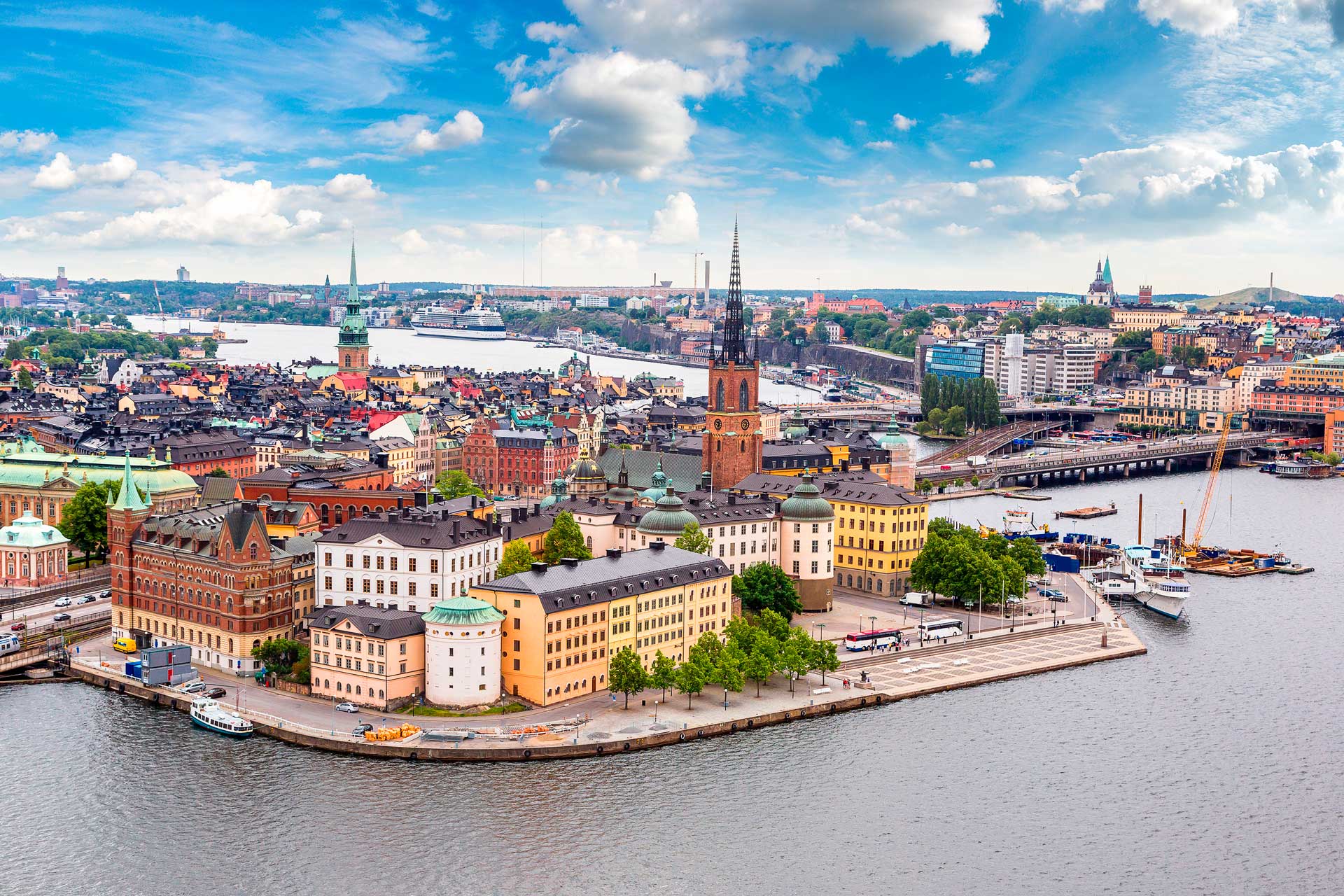
Choosing the best city is largely subjective, but in practice it is usually more rational to relocate to larger urban areas with developed infrastructure, an active business environment, and a broad labour market. Stockholm is considered the leading option according to these criteria.
In addition to Stockholm, Malmö is also worth considering, as it has a large immigrant population and slightly lower housing prices. Gothenburg and Uppsala are well-known student centres. Gothenburg offers strong opportunities for employment and entrepreneurship, while Uppsala is known for its calmer and more relaxed atmosphere. Many residents choose to rent more affordable housing in Uppsala while commuting to Stockholm for work.
Reviews from foreigners who relocated to Sweden can generally be divided into two categories. The first consists of positive feedback about life in the country itself. Immigrants often confirm that Sweden offers a very comfortable lifestyle, strong earning opportunities, visible state support in many aspects of daily life, and friendly, open-minded residents. Many newcomers mention the cloudy weather as a disadvantage, but overall this rarely has a serious impact on quality of life.
The second category concerns the legalisation process in Sweden. Most migrants acknowledge that obtaining long-term status is not simple. It is important not to assume that permanent residence will automatically be granted after 5 years of living in the country.
One of the main difficulties is the long processing time for residence permit and permanent residence applications. Some foreigners report waiting up to 2 years for their first residence permit. Although knowledge of Swedish is not required for many immigration categories, in practice it can be difficult to resolve everyday and migration-related issues without speaking at least English. For this reason, many immigrants recommend relocating to Sweden only if you already know English at a functional level. To avoid additional delays caused by document mistakes, missed deadlines, or choosing the wrong immigration basis, many applicants prefer to work with professional immigration specialists.
There are generally two main options for immigrating to Sweden. The first is the standard pathway described in this guide — gradually obtaining a temporary residence permit followed later by permanent residence. This option is accessible to many applicants, the requirements are realistic, and there are no major restrictions, but the process is lengthy. For several years, residents continue to have limited rights in the country and cannot remain outside Sweden for extended periods.
The second option is to first obtain EU citizenship through a simplified procedure and only afterward relocate to Sweden.
For the first 3 months in Sweden, EU citizens generally do not face any immigration formalities. To stay longer, it is usually sufficient to register in the Swedish Population Register. EU citizens may work, establish businesses, and access public services on conditions similar to Swedish nationals. This pathway is often significantly more advantageous. Through simplified EU citizenship programmes, it may be possible to obtain an EU passport within up to 14 months without long-term residence requirements or other strict obligations. Such repatriation programmes exist only in several EU countries, but their conditions are accessible to many applicants.
Immigration specialists can explain simplified citizenship procedures in countries such as Slovenia, Romania, or Bulgaria, assess eligibility for participation, and support applicants throughout the process. Contact professionals for an initial consultation.
There is no universal “5 years for everyone” rule. The required period depends on the immigration basis. Work permit holders may usually apply after 4 years of employment with a valid permit during the previous 7 years. Self-employed entrepreneurs may qualify after at least 2 years of running a business. Certain family-based categories allow applications after at least 3 years of residence with a permit. Doctoral students may apply after 4 years during the previous 7 years. Separately, EU long-term resident status generally requires 5 years of lawful residence in Sweden.
No. Swedish permanent residence gives the right to live and work in Sweden without time limitations as long as the person continues residing in the country. EU long-term resident status is a separate status available to non-EU/EEA nationals after 5 years of continuous lawful residence in Sweden.
Standard education below doctoral level generally does not create a direct pathway to permanent residence. For EU long-term resident status, time spent in Sweden on temporary permits, including most study permits below doctoral level, is usually not counted toward the 5-year requirement. Doctoral students follow a separate rule and may qualify for permanent residence after 4 years on doctoral-study and/or work permits during the previous 7 years.
Applications for permanent residence are usually submitted together with an application to extend the current residence permit. For example, employees may apply when extending a work permit after 4 years of employment, while entrepreneurs may apply when extending their permit after at least 2 years of business activity.
Yes. Applicants must prove financial self-sufficiency and good conduct. The exact requirements differ depending on the category. For example, entrepreneurs must demonstrate stable income from their business, while doctoral students must show financial independence and an intention to continue living in Sweden.
This requirement refers to compliance with Swedish laws and residence conditions. In practice, authorities may evaluate criminal convictions, serious violations, debts to the state, and compliance with the conditions of previous residence permits.
Yes. Permanent residence gives the right to live and work in Sweden as long as the person remains a resident of the country.
Yes. Although permanent residence itself is indefinite, the residence card must still be renewed periodically. The card serves as proof of the right to stay in Sweden, and obtaining a new card generally requires updated photographs and fingerprints.

Ability to do business and work in the EU without restrictions
Study in European universities with the civil rights
Visa-free travel to more than 160 countries around the world
Full access to the freedoms and guarantees established for EU citizens