
How a Foreigner Can Obtain Italian Citizenship: Detailed 2026 Guide
Italian citizenship may be obtained by foreigners who have legally lived in the country for...
 14.09.2026




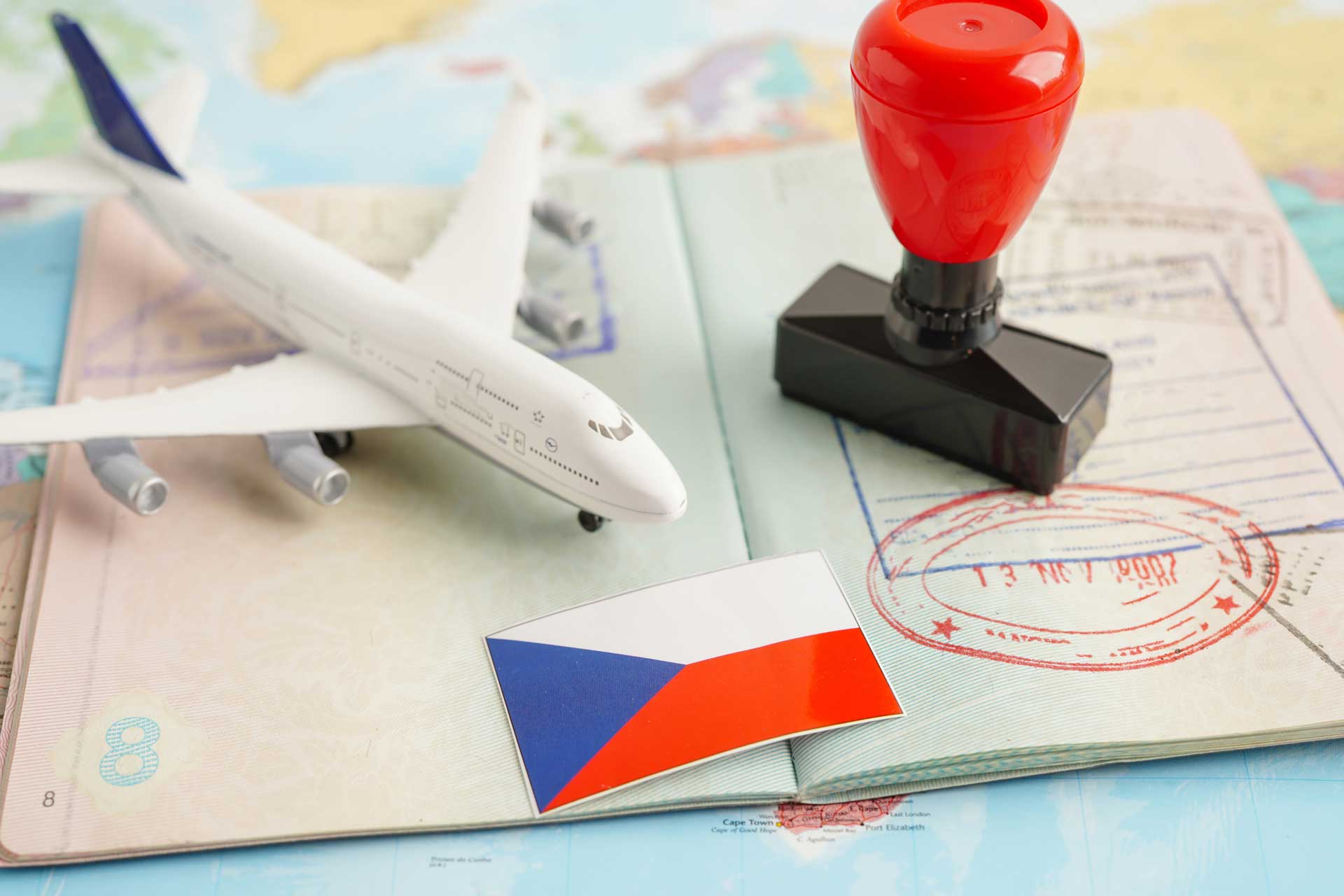
Permanent residence (PR) in the Czech Republic is a status granted to foreigners on an indefinite basis, typically after 5 years of residence in the country. Initially, you must immigrate with an appropriate type of residence permit, such as employment, business, family reunification, investment, or another valid category. The temporary residence permit must then be renewed as required, and after meeting the residency period, you can apply for permanent residence. The key requirements include having accommodation in the country, valid health insurance, sufficient financial means (from €200 per month), a clean criminal record, and knowledge of the Czech language at least at the A2 level according to the CEFR.
Relocating to the Czech Republic appeals to those seeking to live in a stable EU country in Central Europe. It ranks among the top 25 countries worldwide for quality of life according to Numbeo and scores highly across various indicators, including climate, environmental quality, purchasing power, and cost of living. Most foreigners must wait at least 5 years to obtain permanent residence, and in some cases longer, depending on the type of residence permit. Immediate permanent residence is granted only in specific cases, such as family reunification (if the sponsor already holds permanent residence) or for individuals of Czech descent.
Citizens of any EU country can live in the Czech Republic indefinitely with full access to employment, education, business opportunities, and healthcare. During a free consultation with a migration specialist, you can assess your eligibility to obtain a second EU passport through accelerated procedures within as little as 12 months.
Immigrating to the Czech Republic is appealing due to the opportunity to live in a developed EU, NATO, and Schengen Area country. There is a strong balance between income and expenses: with an average monthly salary of around €2,130, a single person typically spends about €770 on basic needs (food, transport, clothing, entertainment, sports, utilities) and €600–750 on renting a one-bedroom apartment.
Other advantages of moving to the Czech Republic for permanent residence include:
Obtaining permanent residence is one of the steps toward Czech citizenship through naturalization, which can typically be granted after 10 years of residence. Applicants must demonstrate good conduct, financial independence, and successful completion of an integration exam. As the Czech Republic is an EU member state, its citizens automatically enjoy full EU citizenship rights.
According to EU regulations, citizens of all member states have equal rights throughout the Union. In some EU countries, such as Romania, Bulgaria, and Slovenia, citizenship can be obtained through official repatriation programs, without relocation, prior residence permits, or the standard naturalization requirements.
To move to the Czech Republic for permanent residence, it is usually necessary to first obtain a temporary residence permit and live in the country for at least 5 years. Immediate eligibility for permanent residence is granted to individuals of Czech origin, expatriates and their close relatives. The status may also be granted to a child who immigrates to live with a parent holding permanent residence. No other exceptions are required by law.
Not all types of residence permits count toward the required residence period for permanent status. For example, posted and seasonal workers, Au Pair participants, and individuals serving sentences in local prisons are not eligible. Below are the most common types of residence permits:
Czech companies can employ foreign nationals with approval from the Labor Office, which first verifies whether the position can be filled by candidates from within the EU. A work-related residence permit is issued upon signing an official employment contract with a salary not lower than the national minimum wage (€915 per month). There are also simplified rules for hiring highly qualified specialists without Labor Office testing, but these are subject to annual quotas and strict requirements regarding education and professional experience. A digital nomad residence permit exists, but it is mainly available to citizens of non-EU countries.
Authorities encourage immigration of entrepreneurs whose business projects can bring economic benefits to the Czech Republic. Initially, a long-term visa is issued for up to 12 months. During this period, the applicant must relocate, register a company or sole proprietorship, and begin business activities.
If, after one year, the business generates income and taxes are properly paid, a residence permit can be obtained. There are no formal minimum capital requirements for foreign companies, although internal standards may apply, for example, a joint-stock company requires a minimum capital of €80,000.
Unlike countries such as Cyprus or Malta, the Czech Republic does not grant permanent residence directly in exchange for investment, but it is possible to obtain a residence permit. The minimum investment amount is 75 million CZK (approximately €30.6 million).
Investments can be made in business projects, provided that at least 20 new jobs are created for EU citizens and their family members for a period of 24 months or more. The investment can be directed toward both tangible assets (offices, equipment, factories) and intangible assets (training programs, software, etc.).
A common reason for immigrating to the Czech Republic is the desire to live together with a family member who holds permanent residence or an EU passport. It is also possible to reunite with a resident who has held a qualifying temporary residence permit for at least 15 months. Relocation is typically available to legally married spouses and children under 18 (unmarried). In exceptional cases, other dependent relatives may also qualify. The sponsoring person must provide accommodation for the family members and ensure their registration. The family’s income level is also assessed and must not be below the subsistence minimum based on age.
Young people often move to the Czech Republic after enrolling in a university program. Residence permits are also granted for advanced training through international exchange programs, paid internships, or volunteer activities. Time spent in the country as a student counts toward permanent residence at only 50%, meaning it usually takes around 7–7.5 years after graduation to qualify. After successfully obtaining a degree, graduates can apply for a new residence permit valid for 9 months to search for employment or start a business.
Qualified researchers may relocate to the Czech Republic after signing an employment contract with a Czech institution to participate in scientific or development projects. The host organization assumes responsibility for supporting the immigrant. After completing the project, the individual may switch to another type of residence permit, for example by signing a long-term employment contract.
Foreign nationals facing danger in their home country and unable to receive protection there may apply for asylum in the Czech Republic. However, approval is not guaranteed, in the most recent reporting year, only 21% of applicants were granted asylum. The same applies to those seeking international (subsidiary) protection.
The Modrá karta (EU Blue Card) is a permit for highly qualified professionals, issued to applicants with relevant education and an employment contract with a Czech company for at least 6 months. The minimum salary must be at least 1.5 times the national average around €3,200 before taxes in 2026. Time spent in other EU countries under a Blue Card (from 12 months) can also count toward permanent residence, provided the applicant has worked in the Czech Republic for at least 2 years.
The entire immigration process from moving to the Czech Republic to obtaining permanent residence, typically consists of six steps:
Citizens of European Union countries do not need to go through all these stages or wait for years to reside long-term in the Czech Republic. They are not required to justify their move and are not obligated to learn the Czech language, unlike in the case of naturalization.
In addition to the mandatory 5-year residence in the Czech Republic with a qualifying residence permit, applicants for permanent residence must meet the following six conditions:
Immigration is possible only if the applicant can documentally prove the legality of their stay in the country. Additionally, at the relocation stage, it is necessary to have funds in a bank account amounting to at least 15 subsistence minimums to ensure financial self-sufficiency.
The standard application file for permanent residence in the Czech Republic includes:
Original documents must be submitted along with copies. The application file must be translated into Czech (if applicable) and notarized. Certain documents may also require an apostille.
The cost of immigrating to the Czech Republic includes government fees, transportation expenses, relocation of personal belongings, rent, and services of notaries, translators, and legal advisors. Current government fees at different stages are as follows:
| Expense Category | Cost (€) |
| National visa (D) | 102 |
| Temporary residence permit | 204 |
| Renewal of residence permit | 102 |
| Language exam (A2) | 130.5 |
| Permanent residence permit | 102 |
Taking into account housing rental and living expenses, the total cost over 5 years before obtaining permanent residence can exceed €82,000.
According to reviews from foreigners who have moved to the Czech Republic, as well as international rankings, the quality of life in the country is relatively high. Incomes generally cover basic expenses, infrastructure is convenient for everyone from entrepreneurs to families with children and proximity to other EU countries offers extensive opportunities for travel.
On average, residents of the Czech Republic spend €750–800 per month on basic needs, including:
Rent for a one-bedroom apartment ranges from €590 to €730 per month, while three-room apartments cost €940–1,260. Living expenses are highest in the capital and major cities such as Brno and Ostrava. When relocating, it is advisable to have savings covering at least 300% of monthly rent (including deposit and agency fees), as well as funds for 1–2 months of living expenses, starting from €4,000 per person. Of this, €3,000 is typically required in a bank account as a minimum for visa purposes.
Foreign nationals can work in the Czech Republic with approval from the Labor Office, this usually involves obtaining an Employee Card (a type of residence permit). Some residence permits, such as those issued for family reunification, allow free access to the labor market. The unemployment rate in the country is low, around 3.3%, compared to the EU average of approximately 6%. It is possible to find employment even without qualifications, although salaries will be at the minimum level around €900–1,000 per month.
The average gross salary in the Czech Republic is about €2,130, leaving approximately €1,800 after taxes. This is lower than in countries such as Germany, Denmark, or Sweden but generally aligns with the cost of living. Highly qualified specialists in fields such as IT, energy, economics, and law typically earn €2,500–3,300 per month.
It is also possible to obtain an EU passport through repatriation within 12 months, which provides unrestricted access to employment across most of Europe, including countries with average salaries of €4,500–5,500. EU citizens have priority over non-EU nationals, making it easier to secure more attractive job opportunities.
Holders of Czech permanent residence or certain types of residence permits (business, family, investor) have the right to engage in entrepreneurial activities in the Czech Republic. The conditions are favorable moderate taxation (VAT and corporate tax up to 21%), no minimum share capital requirements for sole proprietors and LLCs (from 1 CZK), and free trade within the European Single Market.
The country also offers grant programs for startups in key sectors, for example through CzechInvest (the Business and Innovation Support Agency). The company registration process is relatively straightforward: choose a company name, prepare the articles of association, open a bank account, deposit the share capital, and register with the commercial and tax authorities.
Primary and secondary education in the Czech Republic is free for everyone, including immigrants. School attendance is compulsory for children; otherwise, parents may face administrative penalties. A private kindergarten costs approximately €550 per month, while an international school with English-language instruction costs around €10,800 per year.
Higher education can also be free for foreigners if the program is taught in Czech and the applicant successfully passes entrance exams. Popular universities include the Czech Technical University, the University of Economics, and Charles University in Prague. Paid programs cost from around €2,000 per semester.
The Czech Republic operates a public health insurance system. Insurance is typically paid by the employer (through payroll deductions) or by the state (for pensioners and socially vulnerable groups). If a foreigner is neither employed nor running a business, private insurance is required, which is more expensive, on average €100–150 per month. The average life expectancy is around 80 years, indicating a high standard of healthcare.
For career and business opportunities, migrants usually choose Prague, the capital and the country’s main economic and cultural center. Brno and Ostrava offer more affordable housing and less traffic congestion but have fewer job opportunities across various sectors.
Even smaller towns in the Czech Republic are well-equipped for comfortable living, with access to pharmacies, shops, public transport, schools, and childcare facilities. Cities such as Plzeň, Turnov, and Olomouc are popular among students, remote workers, and families seeking a quieter lifestyle.
Foreigners who have chosen to move to the Czech Republic generally do not regret their decision and share positive feedback about living in the country. Among the advantages, they highlight a high level of safety even in large cities, a good balance between salaries and expenses, easy travel across Europe, and high-quality healthcare services. Students often benefit from free education after learning the Czech language in advance, while entrepreneurs appreciate the absence of minimum share capital requirements for LLCs and a favorable tax system.
Common drawbacks mentioned by immigrants include bureaucracy in government institutions, limited digitalization, and long waiting times for appointments and application processing. Many people are forced to move out of Prague and settle in the suburbs due to steadily rising rental prices. Without a recognized diploma and knowledge of the language, it can be difficult to find well-paid employment. Many recommend immigrating with EU citizenship status, as it provides priority in employment, more business benefits, and eliminates dependence on obtaining and renewing residence permits.
To relocate to the Czech Republic and immediately gain maximum benefits, one option is to obtain a passport from another EU country through repatriation. EU citizens enjoy equal rights across all member states, they can freely work, study, access social benefits, and apply for business grants after relocation.
Under accelerated programs, an EU passport can be obtained within approximately one year, with minimal requirements: being over 18, having no criminal record, and submitting a properly prepared set of documents to the authorities.
International law specialists offer step-by-step assistance in obtaining second citizenship within the European Union. Immigration experts can analyze your background, select the most suitable repatriation program, independently prepare the required documentation, and assist with submission to government authorities. Contact them now to obtain a strong EU passport in a short time and without investment.
In most cases, you must legally reside in the Czech Republic for at least 5 years. For EU citizens, the process is simpler and often faster, while some categories (e.g., refugees or family members of Czech citizens) may qualify earlier.
Yes, but usually only partially. In many cases, time spent on a long-term student residence permit is counted at 50% toward the required 5-year period.
You typically need to prove continuous legal residence, stable income, accommodation, integration into society, and basic knowledge of the Czech language (A2 level). You must also have no serious criminal record.
Yes, for most applicants. You must pass a Czech language exam at approximately A2 level, although certain groups (such as children or some long-term residents) may be exempt.
Processing times vary but usually take several months (often 2–6 months), depending on the complexity of the case and workload of the authorities.
Yes. After holding permanent residence for several years (usually 5 years, or less in some cases), you may become eligible to apply for Czech citizenship, provided you meet additional requirements such as language proficiency and integration.

Ability to do business and work in the EU without restrictions
Study in European universities with the civil rights
Visa-free travel to more than 160 countries around the world
Full access to the freedoms and guarantees established for EU citizens