

Residence Permit in Germany: Complete Guide to Obtaining It in 2026
A German residence permit is an authorization to reside that allows a foreign national to...
 23.09.2026




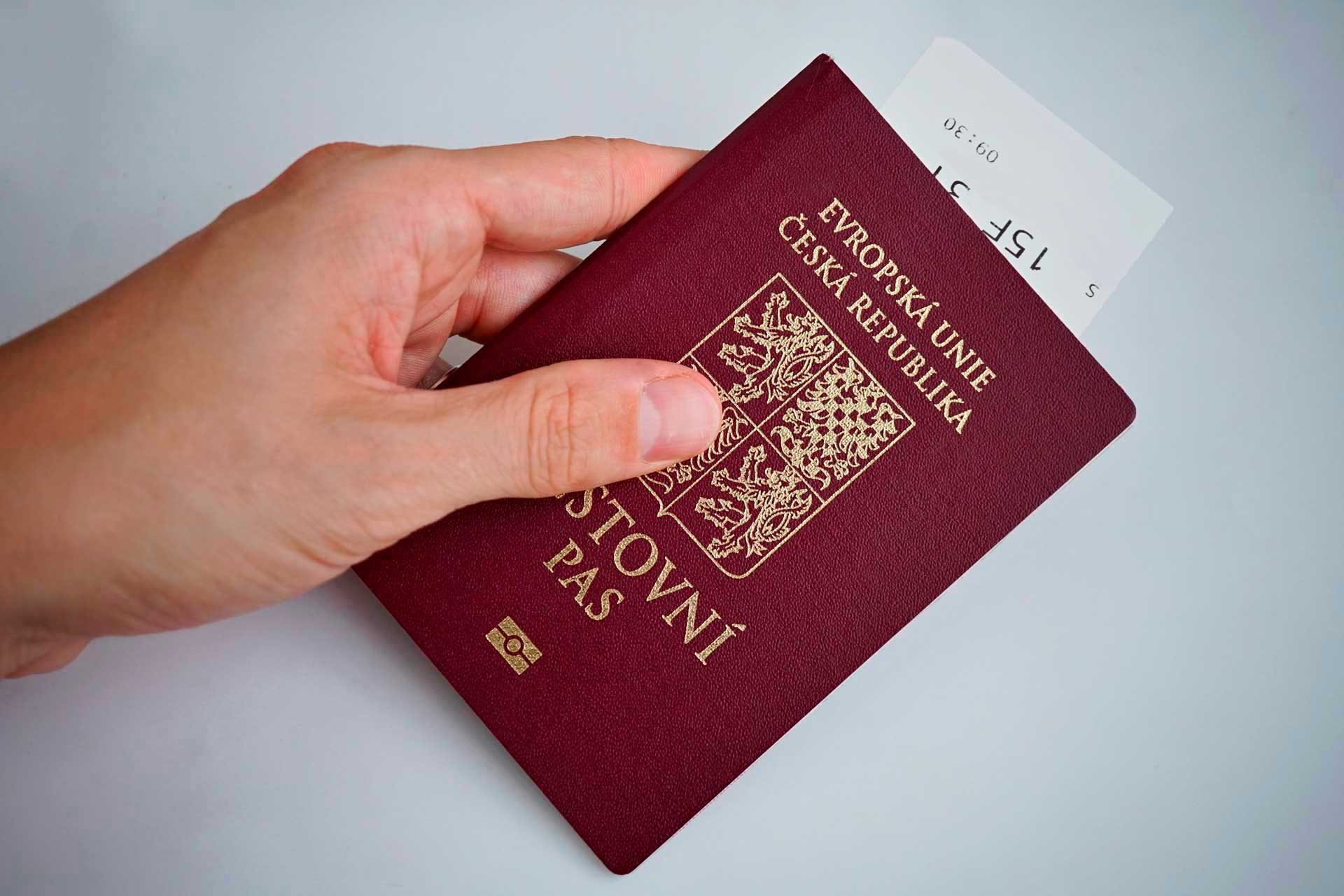
Czech citizenship is a legal status that provides the full range of rights and freedoms within the country. A Czech passport opens up a wide spectrum of opportunities covering all areas of life, from choosing a place of residence to employment and work in highly paid and promising positions. The Czech Republic is part of the European Union, which automatically makes the holder of its passport a citizen of the Union and grants access to free movement throughout its territory as well as visa-free travel to more than 160 countries worldwide.
Czech citizenship allows individuals to use the European healthcare system, receive free education at prestigious universities within the EU, and guarantees reliable social protection from the state. It can be obtained in several ways — through repatriation, birth, naturalization, adoption, or for special merits before the country. Detailed information about the process of obtaining a Czech passport, as well as the advantages and disadvantages of immigration to the republic, can be found further in this article.
The legislative framework of the Czech Republic in the field of migration consists of several legal acts — including the laws “On Citizenship”, “On the Residence of Foreign Nationals”, “On Asylum”, and “On Employment”. The Constitution serves as the foundation, defining the basic principles of the state’s migration policy. Since the Czech Republic is part of the European Union, its legislation complies with the general EU principles in this field, although it has certain national characteristics.
In 2026, the government of the republic places significant emphasis on attracting highly qualified specialists in order to develop the economy and increase the country’s competitiveness. The overall migration policy is aimed at controlling and regulating the flow of foreign nationals, as well as improving their integration into society. Therefore, knowledge of the Czech language and culture plays an important role in this process.
Since Czech citizenship can be obtained through several different pathways, the range of potential appliants is also broad. At present, the following categories of individuals may obtain a Czech passport:
The conditions and requirements for applicants may vary depending on the basis for obtaining citizenship, but the key criteria are:
The standard list of documents that must be submitted together with the application for Czech Republic citizenship includes:
It is not possible to buy Czech citizenship or obtain status through childbirth in the country, but there are several opportunities to accelerate the process or undergo a simplified procedure. Below are the main ways to obtain a passport of the republic.
A child automatically acquires citizenship if at least one parent holds a passport of the country. This rule also applies to children born in the Czech Republic who are not entitled to another citizenship, provided that both parents are stateless persons or one of them holds a Czech residence permit valid for more than 90 days.
Foreign nationals who lost citizenship of the Czech Republic or the Czechoslovak Socialist Republic before 2014 (with certain exceptions) are entitled to obtain citizenship by origin without meeting the minimum residence requirements. Their descendants — children and grandchildren — may also obtain a passport through repatriation.
Children adopted by at least one Czech citizen pursuant to a decision of a Czech authority acquire a Czech passport. If the adoption was carried out by a competent authority of another state, the child obtains official status in the Czech Republic once the republic recognizes the legality of the procedure. This provision is regulated by the Law “On Private International Law.”
The Ministry of the Interior has the right to grant citizenship to a foreign national residing in the Czech Republic on the basis of permanent residence if this brings significant benefit to the republic in the fields of education, sports, culture, or science, or if it occurs within the framework of fulfilling international obligations corresponding to national interests. Applicants in this category are exempt from the minimum residence requirements in the country.
You may obtain Czech citizenship through naturalization if you meet the program requirements and have lived in the republic for 10 years with temporary and permanent residence permits. An extremely important factor in this procedure is confirmation of the legality of your stay in the country throughout the entire qualifying residence period. Obtaining an initial residence permit with the prospect of further naturalization is possible on one of the following grounds:
The amount of administrative expenses for naturalization is EUR 494, while the waiting period exceeds 10 years. In the case of repatriation, applicants must pay around EUR 20 and wait from 2 months.
Long-term residence for the purpose of obtaining Czech citizenship, the cost of which is measured in financial expenses and waiting time, is not mandatory for legal residence in the republic. Thanks to simplified immigration programs available in Slovenia, Bulgaria, and Romania, you may obtain a European Union passport faster while spending significantly less time, effort, and money. The new status will allow you to freely choose any place within the EU for living, working, or studying without having to go through complex bureaucratic procedures.
You may be refused Czech citizenship if you:
The Czech Republic provides for fines for submitting false or incomplete information about yourself:
If your citizenship application is rejected, you have the right to appeal within 15 days from the moment you receive the refusal. The appeal must be submitted in writing by mail or personally at the application reception department of the Ministry of the Interior, and a response is provided within 120 days.
A Czech passport provides immigrants with many new opportunities, including the full range of rights granted to citizens of the European Union. In most cases, Czech citizenship attracts foreign nationals because of the following factors:
On January 1, 2014, the new Law “On Citizenship of the Czech Republic” entered into force, allowing multiple citizenship. It is possible to obtain a Czech passport without renouncing existing citizenship in the country of origin. Citizens of the republic also no longer automatically lose their connection with the country when obtaining a passport of another state.
If you hold two or more citizenships, each country will consider you exclusively its own citizen. This must be taken into account when entering and leaving the country, as well as when fulfilling tax and other obligations. The Czech Republic has not concluded dual citizenship agreements with other countries.
To better understand the process of acquiring Czech citizenship, as well as the nuances that require special attention, it is worth reviewing feedback from immigrants who have already obtained a passport of the country. As a rule, new citizens highlight the following points:
You can save time and money by contacting our company’s lawyers — they specialize in migration law, have a deep understanding of its complexities, and can help you choose an alternative option for obtaining citizenship. For example, participation in a simplified program in Romania, Bulgaria, or Slovenia makes it possible to quickly and affordably obtain an EU passport, which allows you to live in the Czech Republic without additional conditions or permits.
Acquiring second citizenship is a complex process that requires in-depth knowledge of the legislation of a specific country, as well as certain skills in preparing documents and complying with procedural formalities. Without the appropriate qualifications and practical experience, it is difficult to avoid mistakes and omissions. Therefore, professional assistance in obtaining citizenship of the Czech Republic or any other EU country often becomes a necessary condition for achieving a successful result.
Possessing up-to-date information and understanding the intricacies of the immigration process allows the company’s lawyers to objectively assess your chances of obtaining second citizenship and minimize possible risks. By contacting us, you can receive detailed information about available relocation programs and successfully complete the process of obtaining an EU passport. Start your journey to the European Union today — fill out an application for a free consultation.
In most cases, a foreign national must live in the Czech Republic for at least 10 years: first with a temporary residence permit and later with permanent residence. Citizenship may be requested after 5 years of holding permanent residence status.
Yes. Since 2014, the Czech Republic has officially allowed multiple citizenship. Applicants do not need to renounce their original citizenship if it is permitted under the laws of their home country.
Yes. Most applicants are required to prove Czech language proficiency at a minimum B1 level and pass an examination on the Constitution, history, and culture of the Czech Republic.
Marriage to a Czech citizen does not automatically grant citizenship, but it may simplify the process of obtaining residence permits and subsequent naturalization.
The application process usually takes several months, although more complex cases may require a longer review period.
No. The Czech Republic does not offer citizenship-by-investment programs. Investors may obtain residence permits, but this does not provide accelerated access to citizenship.
A Czech passport allows you to live, work, and study in any EU country, use the European healthcare system, and travel visa-free to more than 160 countries worldwide.
Applicants have the right to file an appeal within 15 days after receiving the refusal. The appeal must be submitted in writing through the Czech Ministry of the Interior.

Ability to do business and work in the EU without restrictions
Study in European universities with the civil rights
Visa-free travel to more than 160 countries around the world
Full access to the freedoms and guarantees established for EU citizens