
How a Foreigner Can Obtain Italian Citizenship: Detailed 2026 Guide
Italian citizenship may be obtained by foreigners who have legally lived in the country for...
 14.09.2026




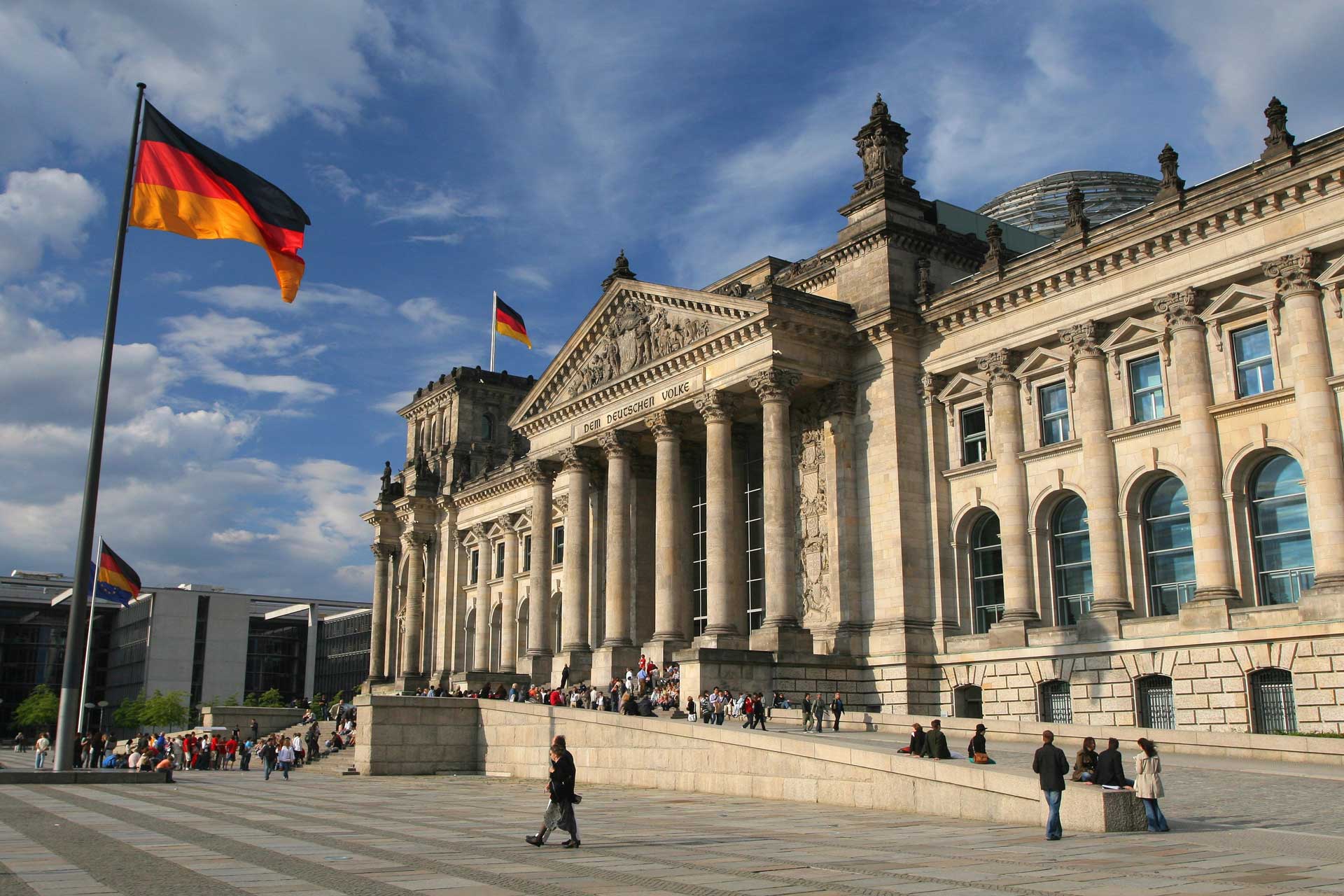
A German residence permit is an authorization to reside that allows a foreign national to legally stay in the country for more than 90 days. To obtain it, there must be a legal basis — employment, enrollment in a German educational institution, family reunification, or another reason provided by law. Unlike a visa, a residence permit allows its holder to work, engage in entrepreneurial activity, and study. In addition, a residence permit card gives the right to travel within the Schengen Area, use the European banking system, and access healthcare and education.
After living in Germany with a residence permit for 5 years, having housing, a stable income, knowledge of German, and meeting the other legal requirements, a foreign national can obtain permanent residence. Permanent status gives the right to live in the country indefinitely without the need to regularly renew the permit. Citizenship also becomes available after 5 years. It provides the full range of rights in the country, including the right to obtain a passport and participate in elections.
A valid residence permit in Germany gives you access to many benefits available to residents. The exact scope depends on the type of residence permit. The basic options available to most categories include:
However, a residence permit does not provide all the rights that become available to foreign nationals after obtaining permanent residence or citizenship. It is a temporary status that must be renewed regularly. It is also important that the basis on which it was issued continues to exist; otherwise, the permit will not be renewed. In addition, a foreign national must strictly comply with immigration law. Violations or a prolonged absence from the country may lead to cancellation of the status or refusal to renew it.
To enjoy all the privileges of EU citizenship, it is not always necessary to wait 5 years or longer. Some European Union countries offer simplified programs that make it possible to obtain a passport in as little as one year. Our specialists can tell you during a free consultation whether you may be eligible for such an option.
Moving to Germany is suitable for those who plan to build a career or develop their own business. The country has demand for specialists in medicine, IT, and engineering. If you have an economically viable business project or conduct independent entrepreneurial activity, you may also obtain a residence permit.
Although Germany does not have a separate Digital Nomad Visa program, freelancers and professionals working remotely for foreign companies can obtain a residence permit for self-employed persons. German universities offer high-quality education with subsequent employment opportunities. For this reason, Germany is often chosen by families with children and young people.
Despite its many advantages, residence in Germany is not suitable for everyone. The country has a progressive taxation system, so the fiscal burden may be high for people with high incomes. Housing rental costs and everyday expenses also remain among the highest in Europe.
Those who want to obtain a European passport quickly should keep in mind that immigration to Germany is a lengthy process requiring compliance with a significant number of conditions. To retain their current status, holders of many types of residence permits must spend most of the year in the country. When granting permanent residence or citizenship, immigration authorities take into account the period of actual residence and the level of integration into German society. Knowledge of German plays an important role. It makes it easier to find work and handle everyday matters and is mandatory for obtaining long-term status.
Therefore, if your priorities are minimal taxes, a flexible lifestyle without being tied to a specific country, or obtaining citizenship under the simplest possible conditions, it is worth considering immigration programs in other countries. Our specialist can tell you more about them during a consultation.
The grounds for obtaining a residence permit include employment, study, running a business, independent professional activity, and family reunification. The application procedures are similar.
As a rule, the applicant must confirm the legality of the basis for relocation, the availability of a stable income or funds in a bank account, and health insurance. The minimum level of income or savings depends on the chosen program and is calculated individually, taking into account living expenses and family composition.
Processing time in most cases ranges from 1 to 3 months, although in individual cases it may take longer. In most cases, the government fee for the initial issuance of the permit is EUR 100.
Most permits are issued for a limited period. If the conditions under which the permit was granted remain in place and immigration law requirements are met, the status can be renewed. Many residence permits allow their holders to work, practice independently, or engage in entrepreneurial activity. A residence permit holder may bring their family to Germany.
To apply for a residence permit, you must have an official job offer or an employment contract already concluded with a German employer. The immigration authority takes into account your qualifications and whether the position meets the requirements of the law.
Highly qualified specialists with higher education who have confirmed their professional competence can obtain an EU Blue Card if they meet the salary requirements. The minimum annual salary must be EUR 50,700, and for certain shortage occupations EUR 45,934 or more.
Holders of a regular work residence permit must notify the Ausländerbehörde when changing employers. EU Blue Card holders are required to notify the immigration authorities only during the first year of residence, when the authorities check whether the new employment contract complies with the conditions for granting the status. This type of residence permit is usually issued for the duration of the existing employment contract and may be renewed.
Foreign nationals who have opened their own business in Germany — by registering a company or carrying out entrepreneurial activity that serves the country’s economic interests — may obtain a German residence permit. When applying, it is necessary to provide a business plan detailing expected expenses and revenues, sources of financing, and development prospects. The law does not establish a minimum investment amount. The required amount depends on the specifics of the project.
After registering a business, the entrepreneur must comply with German law, pay taxes on time, and keep accounting records. The first business residence permit is issued for up to 3 years. If the company continues operating by that time and the applicant still meets the grounds for residence, the status may be renewed.
The basis for obtaining this permit is study at a German university or participation in preparatory language courses. The document package must include a letter of admission and proof of at least EUR 11,904 per year to cover living expenses during the period of study.
The permit is issued for the expected duration of studies. Students are entitled to work up to 140 full or 280 half working days during a calendar year.
Since time spent in the country with this type of residence permit is not counted toward the required residence period, after graduation another type of permit must be obtained, such as a work or business permit.
Spouses, minor children, and parents who are financially dependent on German citizens or foreign nationals legally residing in Germany may apply for this type of permit. Adult relatives must confirm knowledge of the language at level A1 or higher. The host party must prove that they have income and housing sufficient for the entire family. There is no fixed minimum income amount. The required sum is calculated based on the number of family members being invited and other circumstances.
The choice of residence permit directly depends on the purpose of relocation, professional experience, and the amount and sources of the foreign national’s income.
| Type of Residence Permit | Validity Period | Minimum Income | Right to Work | Possibility to Bring Family |
| Residence permit for financially independent persons | No separate residence permit exists | Not applicable | No | No |
| Work residence permit | For the duration of the employment contract or up to 4 years | For EU Blue Card holders: EUR 50,700; for certain shortage occupations: EUR 45,934. For holders of a regular work residence permit, no minimum salary is established | Yes | Yes |
| Digital Nomad | No separate program exists, but a residence permit for self-employed persons may be obtained | Not provided | No | No |
| Residence permit for entrepreneurs | Up to 3 years with the possibility of renewal | Not established | Yes | Yes |
| Investment residence permit (Golden Visa) | No such program exists | Not applicable | No | No |
| Student residence permit | For the period of study | Sufficient funds for living expenses must be confirmed (at least EUR 11,904 per year) | Yes, limited to 140 full or 280 half working days per year | Yes, subject to legal requirements |
If you plan to work in Germany, you should choose a work residence permit or an EU Blue Card. To open a business, a permit for entrepreneurial activity is obtained. Those who want to study in the country can use a student residence permit, which later allows a switch to a work status.
If you want to move to the European Union on the basis of investment or remote work, you will need to choose another country, since Germany does not have such immigration programs. You can find out where they are available and how to use them during a consultation with our lawyer.
The application procedure depends on the basis for relocation. However, the general process is the same for many categories of applicants.
The exact list of documents depends on the type of residence permit being applied for. The following package is usually required:
The immigration authority (Ausländerbehörde) may request additional documents. Therefore, before submitting an application, it is recommended to confirm the current list of required documents with the immigration office.
The total cost of obtaining a residence permit in Germany depends on the type of permit, the region of residence, and whether professional assistance is required.
| Expense Item | Approximate Cost, EUR |
| Government fee for issuing a D visa | 75 |
| Government fee for issuing a residence permit | 100 |
| Residence permit renewal | 93–96 |
| Biometric photos | from 5.95 |
| Document translation | from 39.8 per document |
| Apostille | from 16 per document |
| Health insurance | from 120 per month |
| Apartment rental | from 625 |
| Additional living expenses | on average from EUR 1,004 per month per person |
The cost of immigration lawyer services is calculated individually and depends on the complexity of the case.
Most temporary permits are issued for a period ranging from one to several years. At the end of their validity period, an application for renewal is submitted to the foreigners authority. When reviewing it, the authorities usually check:
A temporary residence permit, permanent residence, and German citizenship are different stages of legal residence in the country. A residence permit is issued for a specific period and requires renewal. Permanent residence allows a person to live, run a business, or work in the country indefinitely and to enjoy almost all civil rights, except participation in elections and employment in public office.
To qualify for permanent residence in Germany and German citizenship, it is important to live in the country continuously, renew the residence permit on time, and comply with the conditions under which it was issued. A prolonged absence from the country may affect the continuity of the residence period. It is also important to remember that if a person lives in Germany permanently or stays there for more than 183 days a year, they become a tax resident and are required to declare income and pay taxes.
As a general rule, permanent status (Niederlassungserlaubnis) is granted after 5 years of lawful residence. Mandatory requirements include stable income and housing, payment of pension contributions, German language proficiency at level B1, and basic knowledge of the country’s social system. Shorter periods for obtaining permanent residence are available to certain categories of foreign nationals, such as EU Blue Card holders.
Permanent residence does not automatically entitle a person to German citizenship. A separate application must be submitted for naturalization, and the legal requirements must be met. In 2026, the general naturalization period is 5 years of lawful residence. In addition, the applicant must know German at level B1, demonstrate successful integration into German society and financial independence, have no serious criminal convictions, and pass the citizenship test (Einbürgerungstest), unless exempt. The test may be waived for foreign nationals under 16, applicants who graduated from a school or university in Germany, and persons with medically documented health conditions.
The most common reasons for refusal to issue a residence permit include:
Before submitting an application, it is recommended to carefully check the document package and make sure that all information is accurate and complies with legal requirements.
Moving to Germany attracts foreign nationals with the opportunity to settle in a country with a high standard of living, developed social protection, and a stable economy. However, before applying for a residence permit, it is worth considering not only the advantages but also the possible difficulties.
| Advantages | Disadvantages |
| High level of safety — Germany is considered one of the safest countries in Europe due to the effective work of law enforcement agencies and a low level of violent crime. | High cost of living — the largest expenses are housing rent, health insurance, utilities, and groceries, especially in major cities. |
| High-quality healthcare — residents have access to a modern healthcare system, a wide range of clinics, and a high standard of medical care. | High fiscal burden — the amount of income tax and mandatory social contributions depends on income level and may be quite high. |
| Affordable education — tuition at many public universities is free or requires only a small semester fee, while German university degrees are highly regarded worldwide. | Housing shortage — finding an apartment in major cities can be difficult, while rental and property purchase prices continue to rise. |
| Developed infrastructure — modern roads, public transport, digital government services, and a high standard of utilities make everyday life comfortable. | Bureaucracy — many administrative procedures take a long time, require advance appointments, and involve preparing a large number of documents. |
| Strong economy and active labor market — Germany offers a wide range of vacancies and good career prospects for qualified specialists. | Climate — many regions have cool weather, rain, and relatively few sunny days, especially in autumn and winter. |
If obtaining a residence permit in Germany is impossible for some reason or does not meet your goals, it is worth considering other options for legal residence in Europe. Many EU countries have simplified immigration programs with more flexible requirements regarding income, processing times, or grounds for relocation.
One popular alternative is the Digital Nomad Visa in Spain, Portugal, or Greece. It allows a person to reside legally in the country while maintaining remote employment.
For qualified specialists, the EU Blue Card may be a good option. It is issued to foreign nationals with higher education and an employment contract that meets the established salary requirements. In some cases, this status makes it possible to obtain permanent residence more quickly.
Entrepreneurs can use start-up visas or business support programs offered by many European countries. Such programs are usually intended for applicants with an innovative business idea and the ability to develop the project in the country.
Some countries also grant residence permits through investment programs, for example, by investing funds in the economy, opening a company, or creating new jobs. Participation requirements and the minimum investment amount depend on the legislation of the specific country.
If an applicant has documented ethnic roots, it is worth considering repatriation and citizenship-by-descent programs. In a number of European countries, they make it possible to obtain a residence permit, permanent residence, or even citizenship under a simplified procedure without many years of residence in the country.
The choice of the appropriate program depends on the specific situation. Therefore, before submitting documents, it is recommended to compare the conditions for legal residence in different European countries in order to choose the fastest, most reliable, and most advantageous route. Our immigration lawyers can help you with this.
The assistance of an immigration lawyer helps avoid mistakes, reduce processing time, and lower the risk of refusal. Qualified support is especially useful in complex immigration cases where it is necessary to deal with a multi-stage individual situation. Professional assistance is also in demand when implementing investment projects, opening a business, and planning taxes if the relocation is connected with entrepreneurial activity or the investment of substantial assets.
Professional support may also be needed when relocating the entire family, when documents must be processed simultaneously for spouses and children while taking legal requirements into account. In addition, it is worth contacting lawyers if errors are found in documents, supporting evidence is insufficient, or a residence permit has been refused. Specialists can help determine the reason for the refusal, prepare additional documents, and choose the most effective next steps.
If you want to obtain a German residence permit with minimal risks or choose the most suitable immigration program, our company’s specialists will assess your situation, prepare the documents, and support you throughout every stage of the process.
Yes. Germany does not have a separate residence permit program based on real estate ownership. Therefore, buying property is not a mandatory condition for obtaining status. The main requirement is to prove a lawful basis provided by legislation.
Yes. To retain the right to renew a residence permit and subsequently obtain permanent residence and citizenship, it is important that residence in the country remains continuous.
Yes. The law provides for this possibility. If the established requirements are met, a spouse, minor children, and in some cases parents who are financially dependent may apply for a residence permit.
If a foreign national becomes a tax resident of Germany, they are required to declare income and pay taxes in accordance with German law. As a rule, tax residence arises when a person lives in the country for more than 183 days a year.
The validity period of the card depends on the basis on which it was issued. Most often, the permit is issued for a period ranging from one year to several years.
Yes. Holders of a valid German residence permit can visit other Schengen Area countries without a visa. As a rule, they may stay there for up to 90 days in any 180-day period.

Ability to do business and work in the EU without restrictions
Study in European universities with the civil rights
Visa-free travel to more than 160 countries around the world
Full access to the freedoms and guarantees established for EU citizens