
Residence Permit in Germany: Complete Guide to Obtaining It in 2026
A German residence permit is an authorization to reside that allows a foreign national to...
 23.09.2026



Permanent residence (PR) in Germany, or Niederlassungserlaubnis, is a status that gives a foreign national the right to live and work in Germany indefinitely without the need for regular renewal. Unlike a temporary residence permit, which is issued for a limited period for a specific purpose and is tied to that purpose, permanent residence effectively gives you the same rights as local residents, with the exception of voting in federal and European Parliament elections.
In 2026, relocation to Germany is most often chosen by qualified professionals, scientists and entrepreneurs, as well as families immigrating under family reunification programs. The main ways to legalize residence in the country are employment, study at German universities and entrepreneurship. Regardless of the chosen route, knowledge of German and income level remain basic criteria for the issuance of immigration permits.
Immigration to Germany is popular because of its stable social system and high legal standards. Permanent residence in the country gives a foreign national the right to:
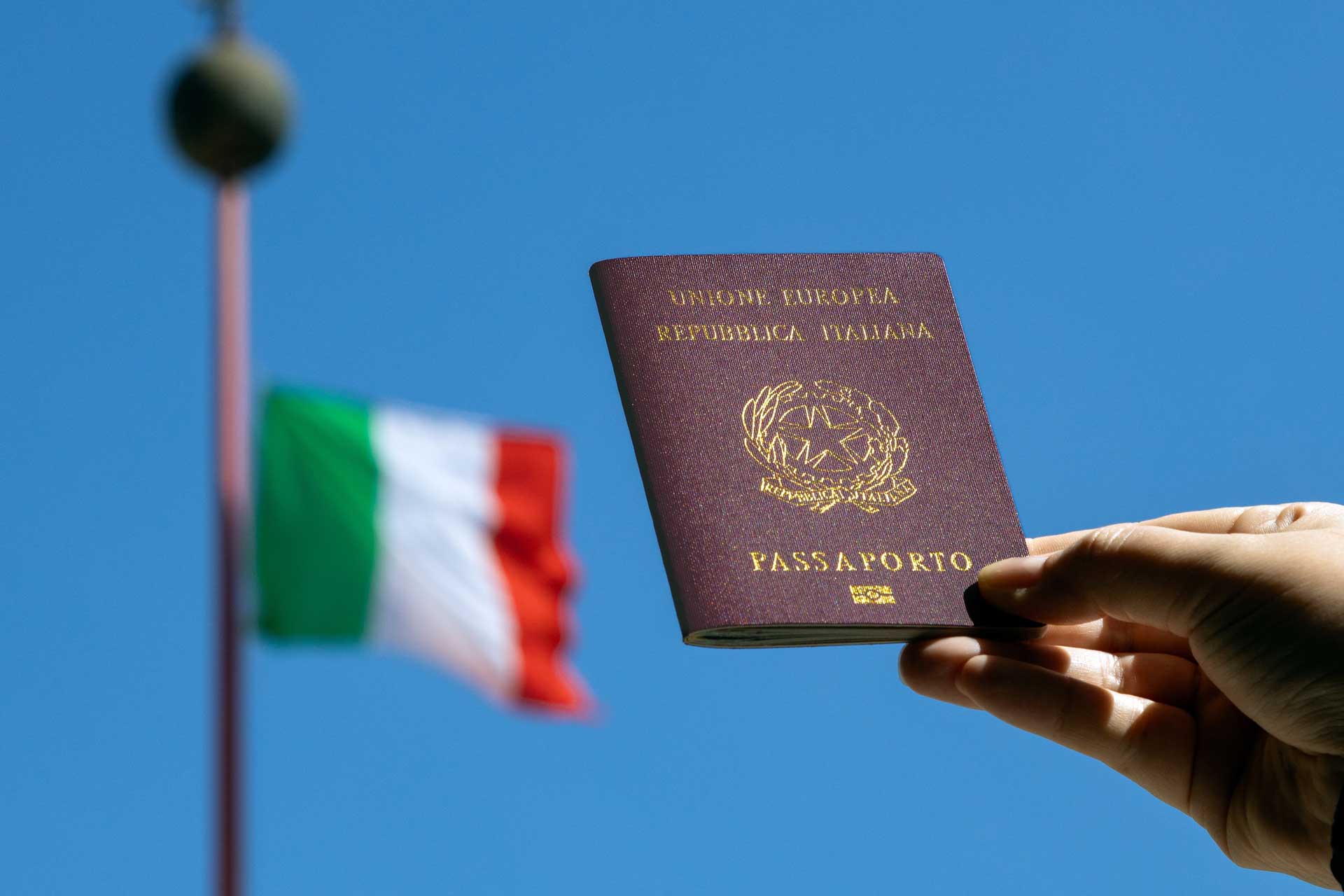
After the reform of German legislation, it has become possible to obtain a German passport through naturalization much faster than before. Citizenship is now available after just 5 years of residence, and there is no need to renounce your first passport.
Germany is a country of high standards, strict rules and substantial taxes, so it is far from suitable for everyone. Relocation there can be recommended to qualified professionals who value a strong work culture and can document their qualifications, entrepreneurs planning to establish a business in the EU market, and families with children focused on a stable future.
You can move to Germany for permanent residence through one of several routes. The main one remains professional immigration, aimed at specialists with higher or secondary vocational education who relocate under a standard employment contract, an EU Blue Card or the new points-based system (Chancenkarte).
The second popular route is academic immigration, implemented through admission to German universities or vocational training. Graduates have the legal right to remain in the country for six months to look for work after completing their studies. In addition, business immigration programs for investors and start-up founders, family reunification with German citizens or permanent residents, as well as humanitarian programs and repatriation are actively available.
Germany’s labor market is experiencing a shortage of specialists, so the state has simplified immigration procedures as much as possible for those coming to work. A standard employment residence permit is issued to candidates with recognized education subject to approval by the Federal Employment Agency. The EU Blue Card is suitable for highly qualified specialists with a high salary. It provides the maximum range of benefits, including simplified family relocation and an accelerated path to permanent residence.
To obtain a residence permit, your position must correspond to your diploma or professional education and guarantee annual earnings of at least EUR 50,700 for the Blue Card or from EUR 45,630 for shortage occupations and recent graduates of German universities. For foreign nationals over the age of 45, the minimum entry threshold for the program is also EUR 55,770. The diploma must be checked through the German Anabin database and have full H+ recognition status.
It is easiest to find work in Germany for:
Processing of documents for work permits at a consulate or foreigners authority takes from 3 to 8 weeks. If the employer uses the paid fast-track procedure for skilled workers, this period is reduced to several weeks.
The difficulty of relocation lies not in obtaining the residence permit itself, but in finding an employer willing to wait for a foreign worker and go through the required checks. The applicant needs a high level of qualification and knowledge of English or German to pass the interview.
The time required to obtain permanent residence depends on the type of current residence permit and language proficiency. For Blue Card holders, the waiting period is only 21 months with a B1 language certificate. If language skills are limited (A1 is sufficient), permanent residence is approved after 27 months. With a standard employment residence permit, permanent resident status can be obtained after 4 years of legal employment and pension contributions (for representatives of shortage occupations, the period may be reduced to 3 years).
To obtain approval for a business visa, your project must benefit a specific federal state — create jobs, launch innovative production or fill a shortage niche in the regional market. The project is assessed by the German Chamber of Industry and Commerce. The applicant must provide a detailed business plan, market analysis and financial projections for 3–5 years ahead.
A foreign national may register a commercial enterprise or obtain Freiberufler (liberal profession) status. The second option is suitable for self-employed doctors, lawyers, architects, journalists and IT consultants. There is no official statutory minimum investment threshold; in practice, it depends on the form of business. The applicant’s account must contain an amount sufficient to cover the project launch costs and personal living expenses.
Companies are taxed at three levels: 15% corporate tax, a 5.5% solidarity surcharge and municipal tax of 14–17%. Standard VAT in Germany is 19%, although in some cases a reduced rate of 7% may apply.
Review of a business plan takes from 1 month; in some cases, consular processing may take up to a year. The difficulty lies in the need to prepare a flawless project according to German standards and prove to the authorities that the business is genuinely viable and will generate income for the region.
Entrepreneurs become eligible for permanent residence after 3 years if the business operates successfully, generates stable income and covers the family’s living expenses. Freelancers can apply for permanent residence only after 5 years of legal residence and tax payments.
Foreign nationals admitted to a German university apply for a national student visa and a temporary residence permit for one year or for the entire period of study. Resident status requires German proficiency at B2 or C1 level, depending on the type of educational institution. To maintain the status, the student must actually study — dropping out of university and remaining in the country is not possible because educational institutions report this to the Foreigners Authority and the residence permit is revoked.
To obtain and renew a residence permit, it is necessary to open a blocked account (Sperrkonto) with at least EUR 11,904 for one year. Another way to prove financial means is an official guarantee from a German resident.
Foreign students are officially allowed to work 140 full or 280 half days per calendar year. During the academic term, part-time employment may not exceed 20 hours per week. Full-time employment is permitted during official holidays.
A graduate has the right to extend the residence permit for 18 months specifically to look for qualified employment in their field. Once you find a job corresponding to your diploma, the student residence permit is converted into a standard employment residence permit or an EU Blue Card with a reduced salary threshold for young professionals.
Admission to a university requires effort (obtaining a German or English language certificate, collecting academic documents, opening a blocked account). However, graduates can qualify for permanent residence after just 24 months of continuous employment in their specialty following graduation, provided that pension contributions have been paid during that period and German is known at B1 level. The period of university study itself is counted only by half toward the five-year period for standard permanent residence, but the two-year employment concession after graduation fully compensates for this limitation.
Both German citizens and foreign nationals with a valid temporary/permanent residence permit can bring a husband or wife to Germany. The requirements include an official marriage (entered into before or after relocation), both spouses being at least 18 years old, and the sponsoring person having sufficient living space and stable income to support the family without state assistance. The relocating spouse must provide a certificate of basic German proficiency at A1 level. If the sponsor works under an EU Blue Card, the husband or wife does not need to take a language test before relocation.
Minor children have an unconditional right to reunite with parents legally living in Germany. The child must be under 18 and unmarried. If the child is already 16, evidence of integration may be required (for example, German proficiency at C1 level). If reunification is taking place with only one parent, an officially notarized consent from the second parent for the child’s permanent residence in Germany is required.
Under the standard procedure, elderly parents from non-EU countries can be brought to Germany only in exceptional cases — for example, if one of them is seriously ill, completely alone and needs constant care that cannot be arranged in the home country. However, qualified employees and Blue Card holders who received their first German residence permit on or after March 1, 2024 have the right to invite their parents (as well as the parents of their spouse) under a simplified procedure without proving severe hardship.
Applications for family reunification at German consulates take about six months to process. The main difficulty of emigrating from one’s home country to Germany lies in the need to prove the need for family reunification and confirm adequate financial resources and housing.
After the application is approved, family members receive a temporary residence permit tied to the sponsor’s status. If a relative has reunited with a German citizen, they are entitled to an individual permanent residence permit after 3 years of continuous cohabitation, provided they know German at B1 level. If reunification took place with a foreign national holding a temporary/permanent residence permit, relatives may apply for permanent residence after 5 years of legal stay in the country, subject to integration and tax payments.
Germany provides an opportunity to restore citizenship or obtain a special immigrant status based on ethnic roots or historical circumstances. The program is open to:
Applicants must provide a chain of documents (birth and marriage certificates, ancestors’ passports indicating German nationality or citizenship). For late resettlers, confirmation of conversational German and a declaration of German identity in official documents are mandatory.
Participants in repatriation programs receive a German passport or a status that automatically leads to it immediately upon arrival at the distribution center or upon completion of the citizenship determination procedure. The difficulty of this immigration route lies in collecting historical archival records and proving continuity of the German line in the family.
Choosing the optimal relocation route to Germany depends on your personal circumstances, budget and desired timeframe. If you have a relevant diploma and work experience, employment or immigration through the EU Blue Card is the clear choice. Those who are young or ready to invest time in education can use a student residence permit to adapt to the country and potentially obtain permanent residence in Germany after just 2 years of work. If there were Germans in your family, you can consider repatriation in order to obtain a passport immediately.
If there were no Germans among your ancestors, book a consultation with a company specialist and check the possibility of obtaining citizenship under simplified procedures in other European Union countries where similar programs operate.
To immigrate to Germany, you will need to complete a number of specific stages in sequence:
For the authorities to approve an application for permanent residence, the applicant must meet the following criteria:
The basic package of documents required regardless of the basis for applying for German permanent residence includes:
In some cases, a school graduation certificate, marriage certificate, civil status documents and business information are additionally provided.
When calculating the budget for relocation to Germany for permanent residence, you should take into account both mandatory expenses (payment of fees) and additional costs directly related to living expenses, preparation of the dossier and legal services. The table shows the current approximate amounts for 2026.
| Procedure | Amount, € |
| Long-term visa | 75 |
| Temporary residence permit, depending on the basis | 100–110 |
| Residence permit renewal | 93–96 |
| Permanent residence, depending on the basis | 113–147 |
| Translation and legalization, per document | 40–50 |
| Health insurance | from 120 |
| Monthly apartment rent, depending on the region | from 600 |
Relocation to Germany can be handled independently; however, if you prefer to avoid stress and save time, it is worth using the services of experienced lawyers. The cost of legal assistance should be calculated separately.
Relocation to Germany primarily means adapting to new living conditions. The country offers high social standards, safety and stability, but requires financial discipline and respect for its rules.
The main expense in the country is housing. Rent in Germany is divided into two types: Kaltmiete (“cold rent,” covering only the living space) and Warmmiete (“warm rent,” including heating, water and waste disposal costs). Electricity and internet are always paid separately and cost around EUR 70–100 per month. A one-bedroom apartment in Berlin, Hamburg or Frankfurt costs EUR 1,000–1,400 per month (Warmmiete), in Munich from EUR 1,300 to 1,800, and in smaller or eastern cities (Leipzig, Dresden) from EUR 600. Food in Germany is relatively inexpensive and of good quality. The average monthly grocery bill for one person who cooks at home is EUR 250–350.
Germany has a nationwide Deutschlandticket travel pass. For EUR 63 per month, it provides unlimited travel on all urban and regional public transport (metro, buses, trams and commuter trains) throughout Germany.
The average salary in Germany this year before taxes is around EUR 4,780 per month. Income tax and mandatory social contributions are deducted from this amount. Depending on the tax class, an employee receives slightly more than half of the initial amount. The minimum wage is EUR 13.90 per hour. With a standard 40-hour working week, this amounts to about EUR 2,400 gross per month.
Popular forms of business in Germany are Gewerbe (sole proprietorship) and GmbH (the equivalent of a limited liability company with share capital from EUR 25,000). Personal income tax is progressive and ranges from 14% to 42%. The regional business tax depends on the municipality of residence and averages 14–17%. The standard VAT rate is 19% (a reduced 7% rate applies to the sale of books and food products).
In many federal states, public kindergartens are completely free of charge (only meals are paid for). However, there is still a shortage of places, so a child should be enrolled in advance. Free school education is compulsory for all children from the age of 6. After primary school, pupils are divided into tracks: Gymnasium (a direct route to university) or Realschule/Hauptschule (focused on applied and vocational professions).
Education at most public universities is free for both citizens and foreign students. Only a semester fee starting from EUR 150 is charged, which includes a public transport pass.
Health insurance in Germany is mandatory for all residents. In public health insurance funds, the contribution is around 14.6% and is split between the employee and employer. Insurance covers doctor visits, hospital care, tests and most prescription medicines. Minor children and a non-working spouse are included in the employee’s insurance free of charge. Private insurance is available to specialists with annual income from EUR 77,400. It gives priority for appointments with specialist doctors and access to enhanced hospital rooms, but the cost of the policy increases with age.
According to those who have moved to Germany, the best cities for living in the country are:
The city for residence should be chosen based on individual opportunities and initial criteria. Take into account the cost of living, the labor market and the real estate market.
Analysis of immigrant reviews suggests that relocation to Germany involves significant bureaucracy. Waiting times and the difficulty of obtaining permanent residence depend on the specific region and foreigners authority. In major cities, processing an application after submission of a complete package of documents can take from 2 to 8 months. In smaller cities, however, it is sometimes possible to receive the card within a couple of weeks.
Most applicants note that if the complete set of documents has been prepared strictly according to the list, the appointment at the immigration office itself is formal and takes 10–15 minutes. Expats advise sending the dossier as a single PDF file and submitting the application exactly on the day when the relevant deadline before the residence permit expires is reached.
Around 80% of negative reviews about relocation to Germany relate to renting housing. In popular cities, as many as 50 people may compete to view a single apartment. Landlords require an impeccable credit history, proof of income for recent months and confirmation of no outstanding debts. In IT companies and major cities, English is sufficient for work and basic everyday matters. However, for resolving household issues (utility companies, plumbers, visits to government offices), German at least at A2–B1 level is critically important.
After adapting and obtaining indefinite status, most people who have relocated change their assessment of life in Germany. Germany is valued mainly for a predictable future, well-designed labor legislation, developed social institutions and strong trade unions. Those who have moved there note the absence of an overtime culture. Paid leave is 28–30 working days per year, and days off are strictly observed. Shops are closed on Sundays, and this time is usually spent with family or outdoors.
Among the disadvantages of relocation are high taxes. A high percentage of salary deductions can be uncomfortable, especially for specialists with substantial incomes. Healthcare is not ideal either — under public insurance, an appointment with a specialist may require a wait of 1 to 3 months. The country has a low level of digitalization — the abundance of postal correspondence, the need to send letters in regular envelopes and weak cashless payment infrastructure in smaller cities add to the difficulties of adaptation.
Since 2024, the standard residence period for applying for a German passport has been reduced. For most foreign nationals, German citizenship becomes available after 5 years of residence in the country. For special achievements before the state, status can be obtained 3 years after relocation. The procedure requires demonstrating outstanding achievements in study or work and a high level of German proficiency — a C1 certificate is required. Spouses of German citizens may apply after 3 years of residence in the country if the marriage has officially lasted at least 2 years.
Language proficiency is one of the main criteria for successful integration. Standard naturalization requires German proficiency at B1 level under the CEFR. The certificate may be replaced by a diploma from a German university or vocational education institution, or by a local school-leaving certificate.
To obtain a passport, a foreign national must pass the citizenship test. It consists of 33 questions on Germany’s legal system, history and culture. The minimum number of correct answers required to pass is 17. The applicant must also provide evidence of financial independence from the state and absence of criminal convictions.
Since June 27, 2024, Germany has officially recognized multiple citizenship. When applying for a German passport, applicants are no longer required to renounce their existing citizenship if the law of their home country permits it.
Preferential citizenship conditions are provided for certain categories of applicants. For example, foreign nationals who entered the Federal Republic of Germany before 1974 (or the GDR before 1990) need only demonstrate spoken German for everyday communication instead of providing a B1 language certificate, and they are not required to take the written citizenship test. Requirements relating to language, the citizenship test and proof of financial independence are waived if a person is unable to meet them due to illness, disability or advanced age.
The main reasons why the German immigration authority may refuse permanent residence are:
Any mistake — from an incorrectly completed field in the application form to a disputed clause in an employment contract — can become a reason for rejection and loss of time. To make the path to permanent residence free from stress, delays and the risk of refusal, it is worth going through it with the support of experienced immigration lawyers. Specialized professionals will review the dossier in advance, resolve issues in a complex case and provide support at every stage of the procedure. Do not risk your status and time — entrust the legal details to professionals in order to obtain your permanent residence card successfully on the first attempt.
Yes. The purchase of residential or commercial property in Germany does not in itself give the right to obtain a temporary or permanent residence permit. German immigration law does not offer “golden visas” for purchasing housing. The main grounds for permanent residence are official employment, active business activity, study or German roots.
The period of continuous residence with a temporary residence permit depends on the conditions of the specific immigration program and ranges from 21 months (for highly qualified specialists with a Blue Card and B1 language proficiency) to 5 years (the standard period for most foreign nationals).
Yes, a language level is mandatory. Most standard permanent residence programs require an official B1 language certificate (the ability to communicate on everyday and professional topics). An exception is made for Blue Card holders, who may apply for permanent residence with A1 language proficiency after 27 months of work, as well as for persons with physical health limitations.
Yes, Germany has a family reunification program. A resident or citizen of the country has the right to invite a spouse and minor children. To do so, it is necessary to have housing of suitable size and conditions and to prove financial stability. Income must be sufficient to cover the basic needs of the whole family without relying on social benefits.
In 2026, the standard naturalization period in Germany is 5 years. With special integration achievements (volunteering, outstanding achievements at work or in studies) and a high level of language proficiency (C1), a passport can be obtained after just 3 years.
Yes. Since June 27, 2024, Germany has officially permitted multiple citizenship. Naturalization no longer requires renouncing the passport of the country of origin if that country’s legislation does not prohibit holding a second citizenship.

Ability to do business and work in the EU without restrictions
Study in European universities with the civil rights
Visa-free travel to more than 160 countries around the world
Full access to the freedoms and guarantees established for EU citizens