
How a Foreigner Can Obtain German Citizenship: A Detailed 2026 Guide
German citizenship is available to foreigners who have legally resided in the country for the...
 16.10.2026



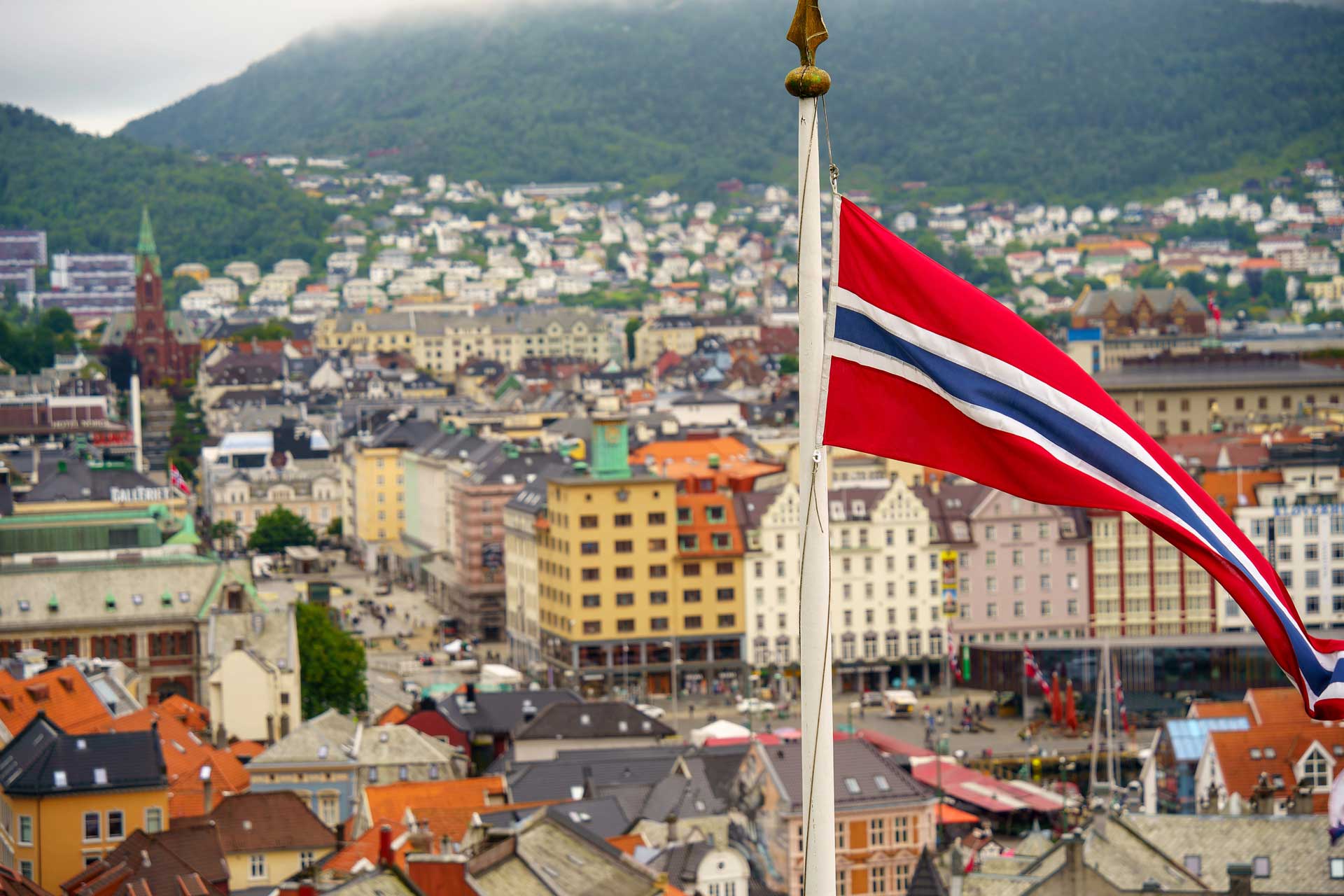
A Norwegian residence permit is an authorization that allows a foreign national to legally reside in the country for the entire period for which the document is issued. Grounds for obtaining it may include employment with a local company, study at a local educational institution, entrepreneurial activity, or family immigration. The main law governing the stay of foreign nationals in Norway is the Immigration Act. It sets out the rules for entry and residence, the grounds for obtaining temporary and permanent residence, and the procedures for obtaining them. Applications are processed by the Norwegian Directorate of Immigration (UDI).
Norway is not a member of the European Union, but it is part of the European Economic Area (EEA) and the Schengen Area. Therefore, legal residence in the country gives access to benefits associated with Norway’s EEA membership, while a local residence permit also allows short-term travel to other Schengen countries.
A residence permit differs from a visa in terms of the purpose and duration of stay in the country. A Schengen visa is primarily intended for short trips, whereas a Residence Permit is issued for long-term residence. Permanent residence is the next, more stable status, allowing a person to live and work in Norway indefinitely. Citizenship provides a significantly broader range of political and legal rights and opportunities.
The opportunities provided by a Norwegian residence permit depend on its type. The main ones include:
In addition to its advantages, a Norwegian residence permit has a number of disadvantages. These include the following factors:
Relocation to Norway is primarily suitable for qualified professionals, entrepreneurs, and families who have lawful immigration grounds. The country has no classic “Golden Visa” or digital nomad program. Therefore, having remote employment, owning local real estate, or possessing substantial savings does not entitle a person to official status.
Entrepreneurs and self-employed persons may move to Norway if they meet the requirements for a residence permit for self-employment. The business must genuinely operate, and the applicant must have the relevant qualifications and funds for its development.
Norway is also suitable for IT specialists. They may qualify for a residence permit as a skilled worker if they have sufficient experience and a job offer from a Norwegian employer. A family with children may move to Norway if a close relative already legally resides in the country. Prospective students choose this destination to study at local universities.
Norway may not be the best choice for those expecting simple immigration conditions and modest expenses. The high cost of living and substantial taxes make relocation financially significant, especially in major cities. To obtain permanent residence and citizenship, you must meet numerous requirements. These include mandatory knowledge of Norwegian at no lower than A1 level for permanent residence and B1 for citizenship, as well as compliance with residence-period requirements. You must not only live here for a long time but also limit the duration of trips outside Norway. Therefore, it is better to look for a more suitable option from the outset if you plan to spend a lot of time abroad.
If you are interested in obtaining legal status in the EU, it is worth considering other immigration options. Some countries offer foreign nationals the opportunity to participate in simplified citizenship programs. If you want to learn where and how you can obtain a European passport within as little as one year, book a free consultation with our specialists.
Norway offers foreign nationals several grounds for long-term residence. These include employment with a local company, business activity, study, and family reunification.
One of the main relocation options is obtaining a residence permit for skilled workers. The status is issued if there is a job offer from a Norwegian employer. The position must correspond to the applicant’s qualifications, and the salary must meet the terms of the relevant collective agreement or the position. If a bachelor’s degree is sufficient for the position, annual pay must be at least EUR 50,000; if a master’s degree is required, it must be at least EUR 57,500. Employment must be at least 80% of a full-time position. If the profession requires a license, it must be obtained.
A foreign national has the right to change jobs. If the new position is in the same profession and meets the other conditions of the existing residence permit, a new permit is not required. If the field of activity changes, a new residence permit must be obtained. The status is issued for 1 year.
Those wishing to conduct business in Norway and personally work in it may obtain a residence permit as a self-employed skilled worker. To register a company (sole proprietorship), the applicant must have the relevant qualifications and prove that the enterprise can generate at least EUR 31,500 per year before tax. If the business involves licensed activity, a special license or permit must be obtained before applying for the residence permit.
Qualifications may be proven by a document confirming vocational or higher education or by evidence of work experience. UDI usually requires at least 6 years of professional experience. There are no requirements regarding the amount of investment in the business. The main requirement is to prove that the business can genuinely generate profit. For this purpose, a business plan containing detailed calculations of income and expenses, as well as contracts with clients, must be provided.
After obtaining a residence permit through business, the foreign national may work only in their own company. Freelancing, remote work, or employment by another employer is not permitted. The permit is valid for 1 year and can be renewed. Family members of the entrepreneur may obtain residence permits through family reunification.
Foreign nationals admitted to a full-time program at an accredited Norwegian university or vocational educational institution may obtain a student residence permit. To do so, they must provide confirmation of enrollment in the course, as well as proof of accommodation and sufficient funds for living in the country during the study period: at least EUR 15,687 per year or EUR 1,426 per month must be available in a bank account.
Attending language courses is generally not a basis for obtaining a student residence permit. Exceptions may apply to certain programs, for example, for recognition of foreign education or obtaining a professional license for employment or conducting business.
A student residence permit gives the right to work, but for no more than 20 hours per week during the academic year and full time during holidays. Students are prohibited from conducting business or working as self-employed persons.
The main disadvantage of this residence permit is that it does not count toward the period of residence required to obtain permanent residence. Therefore, if a student plans to remain in the country after graduation, they must switch to another type of permit (family or work). University graduates may also obtain a one-year residence permit to look for work.
Close relatives (cohabitants, spouses, children, and sometimes parents) of Norwegian citizens or foreign nationals with legal status in the country may obtain a Norwegian residence permit through family reunification. Spouses must confirm that their marriage is genuine. Cohabitants must prove that they have lived together for at least 2 years. An exception may be made if the couple has a child together.
Children receive a residence permit after proving their relationship to the main applicant. If an adult child is financially dependent on the parents, they may also obtain a residence permit. A parent of a Norwegian citizen or a resident of the country may obtain a family residence permit only if they are over 60 years old and have no spouse, cohabitant, or other close relatives who could care for them.
Another important condition for obtaining a residence permit for family reunification is sufficient financial support. The sponsor must have an annual income of at least EUR 40,234 and confirm that it will not decrease for at least the next year. The permit is issued for 1 year and can be renewed.
The choice of residence permit depends on the purpose of moving to Norway.
| Type of residence permit | Validity period | Minimum annual income | Right to work | Possibility of relocating with family |
| Work | Depends on the employment contract (usually up to 3 years) | From EUR 50,000/57,500 | Yes | Yes |
| Business owner/self-employed specialist | Up to 1 year | From EUR 31,500 | Only in own business | Yes |
| Student | For the period of study | From EUR 15,687 | Up to 20 hours per week during the semester and full time during holidays | Yes |
| Family | 1 year | From EUR 40,234 | Yes | Yes |
If your main goal is to obtain permanent residence or Norwegian citizenship in the future, the optimal option would be a residence permit as a skilled worker or self-employed person.
Some EU countries offer accelerated passport programs. To find out how to obtain a European passport without prior residence and without meeting other strict requirements, book a consultation with our lawyer.
The contents of the residence permit application package depend on the immigration basis. The list of required materials is generated after the application is completed. In most cases, the applicant is required to provide the following documents:
All documents must be translated into English or Norwegian and notarized.
The cost of a residence permit in Norway depends on the basis for residence. In addition to the government fee, the applicant will incur other expenses, such as document translation and certification.
| Expense | Government fee (EUR) |
| Work residence permit | 580 |
| Student residence permit | 497 |
| Family residence permit for an adult | 1096 |
| Family residence permit for a minor | 548 |
In addition to the government fee, the following categories of expenses should be taken into account:
A residence permit and permanent residence are two different statuses. The first allows a person to live in Norway for a specified period, after which it must be renewed or the person must leave the country. The second gives the right to live and work in the country without obtaining an additional permit. It is an indefinite status that does not need to be renewed. However, the person still remains a foreign national in Norway.
To renew a residence permit, an application must be submitted to UDI no later than 1 month before the permit expires. For the application to be approved, the applicant must continue to meet the conditions of the requested type of residence permit.
Obtaining a residence permit does not automatically make you a tax resident. To become one, you must be present in the country for at least 183 days during a calendar year or at least 270 days over 3 years.
After living in the country for 3 years with a residence permit (except a student permit), you may apply for permanent residence. In addition to meeting the residence-period requirement, you must satisfy a number of conditions, including earning at least EUR 31,432 during the previous year and having no problems with the law. Applicants aged 18–67 must also demonstrate knowledge of Norwegian and social studies by passing the Norwegian citizenship test.
To qualify for Norwegian citizenship, you must have lived in the country for at least 8 of the last 11 years. For some categories of foreign nationals, the period may be reduced. For example, if your income for the previous year exceeds EUR 35,390, you may submit an application for Norwegian citizenship after living here for 6 of the last 10 years.
You may apply for citizenship while holding either a temporary residence permit or permanent residence. However, if you do not yet have permanent residence when submitting the application file, it is important that you meet the requirements for obtaining it. You must also pass a Norwegian language exam at B1 level or higher and a civic test. It is important that there are no circumstances that could prevent citizenship from being granted.
The main reasons for refusal encountered by applicants include:
The absence of one or more documents in the application file does not always mean an automatic refusal. UDI may give the applicant an opportunity to provide additional information required to make a decision.
The advantages of living in Norway include:
However, there are also significant disadvantages that should be taken into account when planning a move:
If your goal is to move to Europe with minimal dependence on employment in the country, Norway is not the most convenient option. It may be more logical to consider countries where a residence permit can be obtained more easily and quickly. At the same time, it should be borne in mind that there is no single residence permit for the entire EU — an application is submitted directly in the chosen country.
If your main source of income is remote work for a foreign company or your own overseas projects, you may choose an EU country that has a special program for digital nomads. This option may be more advantageous because Norway does not have a separate Digital Nomad Visa program.
Highly qualified professionals should consider the possibility of obtaining an EU Blue Card. It is intended for immigrants from outside the EU who have high qualifications and an employment contract or a binding job offer. The program operates in 25 of the 27 EU countries. Denmark and Ireland are the exceptions.
If you have substantial capital and your goal is to obtain a residence permit through investment, you should choose a country where such a program actually exists. Norway has no Golden Visa or residence permit through real estate, so obtaining status here will be difficult for an investor.
Entrepreneurs with innovative projects may consider EU countries that offer special programs for startup founders. Unlike the Norwegian residence permit for self-employed persons, such programs may be specifically focused on creating and developing innovative businesses.
If a person has ancestors from a European country, it is worth checking the possibility of repatriation or obtaining citizenship by descent, provided that the applicant can document the family relationship and meet the other conditions. This is a shorter route than standard naturalization.
If you are unsure which legalization option is suitable for you, book a consultation with our specialists. They will assess your situation, including your ancestry and documents, and then advise you on the easiest way to obtain EU citizenship.
Professional assistance will be useful if your situation differs from a standard one, as well as if you plan to open a business, invest, or relocate with your entire family but are unsure which type of residence permit in Norway to choose. A competent consultation will also help you understand taxes and determine what obligations you will have after moving to Norway.
A lawyer can review your documents before submission, identify errors, and point out what is missing. If you have previously received a refusal, the specialist will examine the reasons, assess the possibility of an appeal, or help you submit a new application. If you want to assess your chances of relocation in advance and choose the optimal route, book a consultation with our immigration lawyer. The lawyer will review your history and determine an appropriate way to legalize your stay in Europe.
Yes. Moreover, purchasing real estate in itself is not a basis for obtaining a residence permit. The main grounds for foreign nationals are work, study, business, family immigration, and other categories provided by law.
Yes. Actual residence is crucial. Long absences from the country may negatively affect the ability to retain a residence permit.
If a person becomes a tax resident of Norway, they acquire tax obligations toward the state. The threshold for Norwegian tax residence is more than 183 days of residence in the country over 12 months or more than 270 days over 36 months.
In practice, having lawful residence status and identity documents significantly simplifies banking procedures, but an account is not opened automatically; the bank conducts its own customer due diligence.
A residence card is valid for the period for which it was issued — this depends on the category. A Permanent Residence Card itself is valid for two years and must then be replaced, although permanent residence status continues to remain valid.
Yes. Norway is part of the Schengen Area. Foreign nationals holding a valid Norwegian residence permit may make short-term trips to other Schengen countries, usually for up to 90 days within a 180-day period.
No. Norway does not provide a separate residence permit for financially independent persons. Another basis is required to obtain a residence permit, such as work, study, business, or family immigration.

Ability to do business and work in the EU without restrictions
Study in European universities with the civil rights
Visa-free travel to more than 160 countries around the world
Full access to the freedoms and guarantees established for EU citizens